Is The Peking Man Site At Zhoukoudian Worth Visiting?
An honest assessment of the Peking Man Site at Zhoukoudian: what you see, how to book the CNY 30 ticket, how to get to Fangshan, and who the trip genuinely suits.
Is The Peking Man Site At Zhoukoudian Worth Visiting?
Yes, if prehistory, UNESCO World Heritage sites or genuine field-science destinations appeal to you, and you can give it most of a day. Zhoukoudian is not a quick museum stop: it sits in Fangshan District outside central Beijing, the door ticket is CNY 30, and the reservation window opens 7 days ahead at 17:00. For travelers with only two or three days in the city, it is a defensible skip.
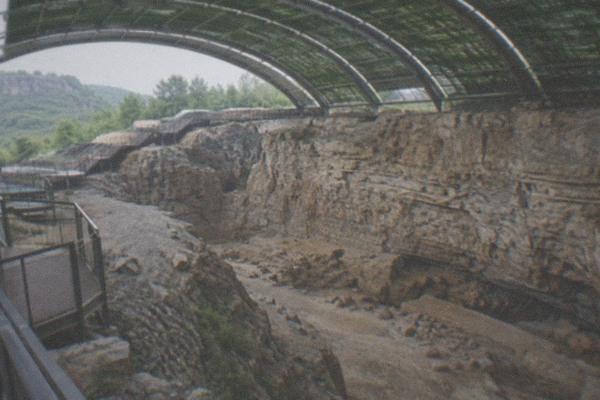
The honest answer depends almost entirely on what kind of traveler you are, and that is worth unpacking before you commit a day. Zhoukoudian is the place where the first skullcap of what became known as Peking Man was excavated from the limestone caves of Dragon Bone Hill, in one of the most celebrated finds in the history of paleoanthropology. It was the largest single collection of Homo erectus fossils known at the time it came to light, and it made this unremarkable hillside southwest of Beijing one of the most important sites in the field. UNESCO inscribed it as a World Heritage site for exactly that reason, and the inscription is about the site itself, the excavated deposits and the caves, not about a collection of objects behind glass.
That distinction matters for expectations. Visitors who arrive imagining a polished national museum with dramatic dioramas tend to leave disappointed. Visitors who arrive understanding that they are standing at an active scientific site, where the excavations themselves are the exhibit, tend to rate the day highly. The museum on the grounds interprets the finds, and the outdoor trail past the cave openings gives you the physical context that no gallery can.
The site is also, plainly, a day trip. It sits in Fangshan District, well outside the museum corridor you would cover on a normal Beijing day, and reaching it means either a long subway-plus-taxi combination or a drive of roughly an hour from the city center depending on traffic. That travel cost is the single biggest factor in the worth-it calculation, more than the ticket price, more than the exhibits. If your Beijing itinerary is short and centered on the Dongcheng and Xicheng highlights, Zhoukoudian competes badly against a second day inside the city. If you have five or more days, or a specific interest in human origins, it becomes one of the more distinctive things you can do in the region.
For visitors weighing it against other science stops in the city, the comparison set looks like this:
A practical note on access before anything else: Zhoukoudian requires an advance real-name reservation, and the booking window opens 7 days ahead at 17:00 Beijing time. There is no walk-up route for general visitors. The reservation runs through the museum's official WeChat channels, and a third-party reservation service can book the official ticket under your passport details if you would rather not wrestle with a Chinese-language mini-program, from $13. If the official quota for your date sells out first, such orders are refunded rather than honored with some substitute entry. The site is closed on Mondays except national holidays, which is the standard Beijing pattern, and a Monday visit is the classic planning mistake.
What Do You Actually See At The Peking Man Site?
Two things, and they need to be understood separately: an indoor museum interpreting the fossils and the excavation history, and an outdoor trail past the actual cave sites on Dragon Bone Hill. The indoor half is compact and modern; the outdoor half is the reason the site is inscribed as World Heritage. Together they tell the story of the discovery and the decades of excavation that followed.
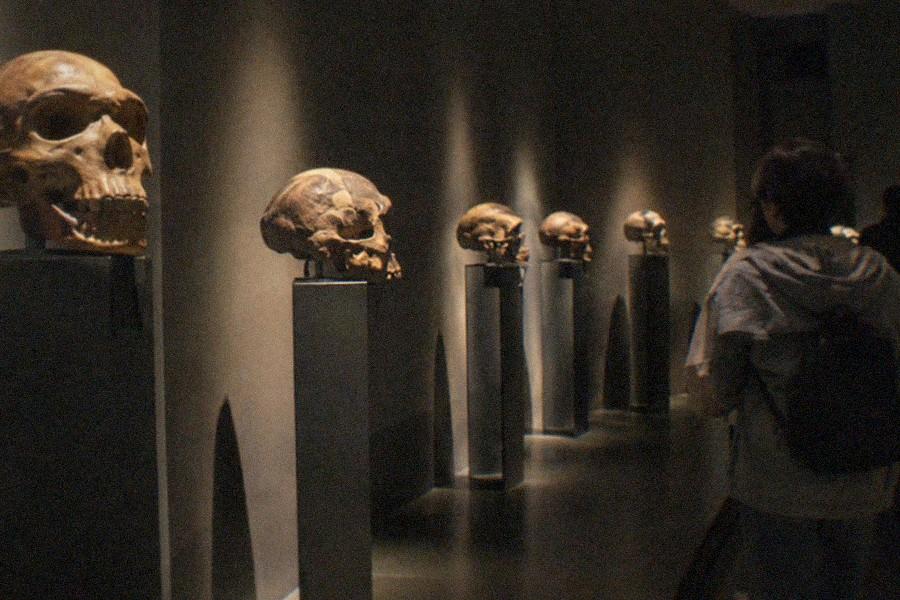
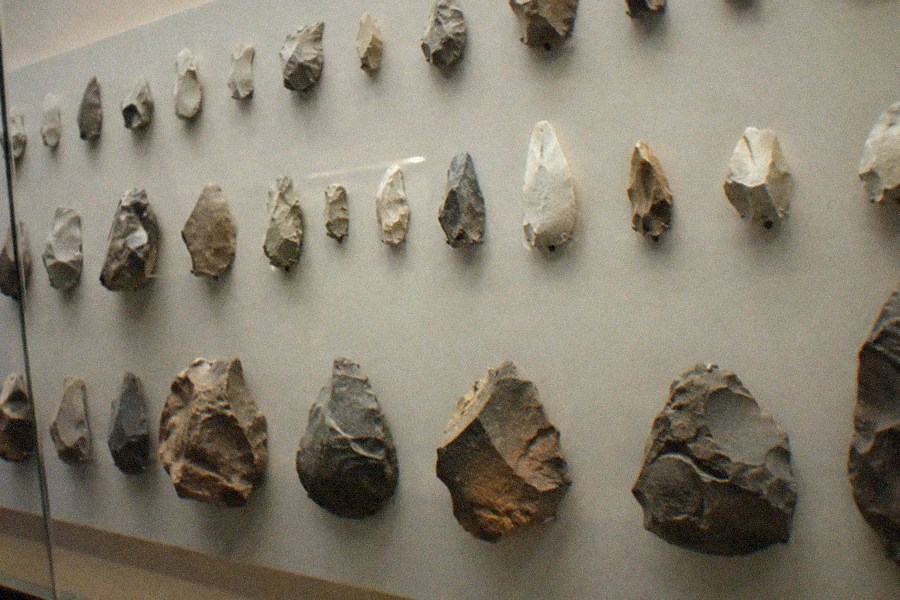
The museum building covers the science. Displays walk through the geology of the area, the sequence of Homo erectus finds, the evidence for some of the earliest controlled fire use anywhere in the world, and the complicated later history of the fossils themselves, which were lost during the upheavals of the mid-twentieth century and survive today mainly as casts and records. That loss is itself part of the story the museum tells, and it is handled with more honesty than many sites manage. The original Peking Man fossils have not been recovered, so what you see in the galleries are reproductions and the surviving fossil material from later excavations, and knowing that before arrival prevents the most common letdown.
The outdoor section is where Zhoukoudian earns its status. A path climbs Dragon Bone Hill past the fenced cave openings where the excavations happened, including the Peking Man cave and the Upper Cave, which yielded the later Homo sapiens finds. The walk is not long, but it puts you physically at the mouth of deposits that were filled in over hundreds of thousands of years, and the interpretation boards along the trail explain what came out of each location. For many visitors this half-hour outside is more affecting than the galleries, because the site is the artifact.
Here is a quick way to set expectations against the other big science venues in the city, all of which are easier to reach:
| Venue | District | What it offers | Door price | Reservation window |
|---|---|---|---|---|
| Zhoukoudian Peking Man Site Museum | Fangshan | Original excavation site, cave trail, paleoanthropology | CNY 30 | 7 days ahead at 17:00 |
| China Science and Technology Museum | Chaoyang | Large interactive science halls, children's areas, theaters | CNY 30 | 7 days ahead at 18:00 |
| Beijing Planetarium | Xicheng | Astronomy exhibits and dome theater shows | do not print | 5 days ahead |
| Paleozoological Museum of China | Xicheng | Fossil collection in central Beijing, near the zoo | CNY 20 | 6 days ahead |
The comparison is instructive. If your interest is specifically fossils and prehistoric life, the Paleozoological Museum in Xicheng gives you a dense collection with a fraction of the travel time, and it pairs naturally with a central-Beijing day, as covered in the fossil museums and paleontology comparison. What the Paleozoological Museum cannot give you is the ground itself. Zhoukoudian is the only place on the list where the fossils were actually found, and that is the entire case for the trip.
How Do You Get To Zhoukoudian And Book Tickets?
Book the reservation first, then plan the journey around it. The official window opens 7 days ahead at 17:00 Beijing time through the museum's WeChat channels, and the door ticket is CNY 30. The site sits at No. 1 Zhoukoudian Street in Fangshan District, roughly an hour from central Beijing by car, and closed on Mondays except national holidays.
The booking mechanics deserve the same seriousness as the Forbidden City's, even though demand is far lower. Zhoukoudian operates a real-name reservation system like nearly every major venue in Beijing, and 22 of the 31 museums and heritage sites in the city now require one. The practical consequence for a foreign visitor is that you cannot simply decide on the morning of a Tuesday to drive out; the slot has to exist in the system under your name first. Demand is modest compared with the Palace Museum, so last-week bookings usually succeed, but holiday periods and school-trip season can tighten it. Other pages covering the same trip are gathered on Beijing Museums.
If handling a Chinese-language WeChat mini-program mid-trip is not how you want to spend an evening, a third-party reservation service will book the official ticket under your passport details, from $13. The service fee buys you the booking labor and an English interface, not a different or better ticket, and if the official quota sells out before your order is placed, the order is refunded. That is the honest shape of the transaction, and it is the same arrangement across the third-party products this site covers. The official museum site at zkd.cn publishes the current reservation channel and hours, and the Beijing municipal government maintains a heritage page for the Zhoukoudian museum with background on the site.
Getting there is the part most guides undersell. From central Beijing, the simplest route is the Fangshan subway line toward the southwest, with a taxi or local bus covering the final stretch to the site; door-to-door, budget up to two hours each way using public transport, less if you take a car the whole way. Drivers and ride-hailing work fine, but the return trip can require walking back to a busier road to get a pickup, so plan the exit before you enter. Combining Zhoukoudian with anything else in a single day is realistic only if the second stop is also in the southwest, which is why the day trip museums outside central Beijing guide groups it with other far-flung venues rather than with the city-center circuit.
One more planning note: eat before you go or pack something. The area around the site is residential and light on the cafes and restaurants a museum district in central Beijing would have, and the site's own facilities are basic. This is a half-day to three-quarter-day outing door to door, and treating it as such makes the whole day feel easier.
Who Should Go, And Who Should Skip It?
Go if human origins, archaeology or UNESCO site-collecting genuinely interests you, if you have four or more days in Beijing, or if you have already seen the central highlights. Skip it on a first short trip, with young children who need interactive displays, or if your museum time is limited and you would rather stay inside the city, where the density of venues per travel hour is far higher.
The profile of the happy Zhoukoudian visitor is specific. They have usually read something about the Peking Man discovery before arriving, they are comfortable spending hours in transit for a site rather than a spectacle, and they treat the outdoor cave trail as the main event. That visitor consistently reports the day as a highlight, precisely because Zhoukoudian is nothing like the imperial core of Beijing. The contrast is the point: you spend the morning at the Meridian Gate and the afternoon at the mouth of a cave where fire was being managed several hundred thousand years ago.
The profile of the regretful visitor is equally specific. They added Zhoukoudian to a packed four-day itinerary as a checkbox, they arrived without knowing the original fossils are lost, and they spent the drive back recalculating what those hours could have bought inside the city. For that traveler, the honest recommendation is to spend the day on the 3-day Beijing museum itinerary route instead, or on the free museums cluster, and save Zhoukoudian for a longer return trip when it can breathe.
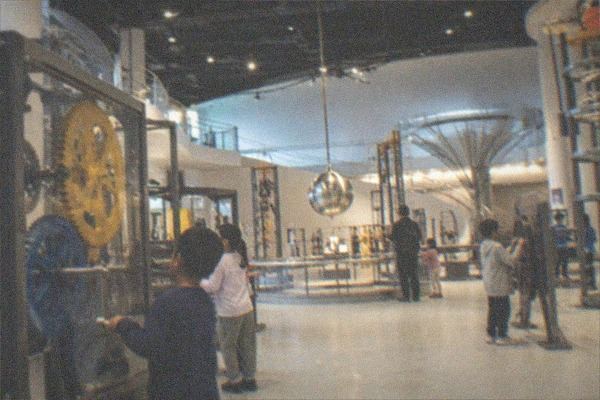
Families deserve a special word. The site is outdoors, involves a hill walk, and its interactivity is limited compared with venues built for children. If you are traveling with kids whose patience for reading panels is short, the China Science and Technology Museum in Chaoyang is the better science stop: it is a large, hands-on institution with dedicated children's areas and theaters, its door ticket is also CNY 30, and it sits on the subway network inside the city. The Beijing museums with kids guide covers that trade-off in detail. Zhoukoudian works for older children who have already caught the dinosaur-and-fossil bug, and it fails for toddlers, full stop.
Academic and serious amateur interest changes the math entirely. If your trip has any research or study dimension, if you are a teacher, an archaeology student, or someone who has stood at Olduvai in a documentary and wished, Zhoukoudian stops being a judgment call. There are only a handful of Homo erectus sites on earth with this level of public access, and this one is a day trip from a major international hub with a CNY 30 door ticket. Go.
How Much Time And Money Does The Visit Take?
Budget half a day on site and a full day including travel, with a door ticket of CNY 30 per adult. The reservation opens 7 days ahead at 17:00, the museum is closed Mondays except national holidays, and transport adds the real cost: a round trip by subway and taxi is a modest outlay, while a private car for the day can exceed the ticket price many times over.
The on-site time splits cleanly. The museum galleries take roughly an hour at a reading pace, the outdoor cave trail takes another three-quarters of an hour to an hour with the interpretation boards, and you should add time for the walk between the museum entrance and the hill. Visitors who move quickly can compress the whole visit to about two hours, and visitors who linger, photograph and reread panels can stretch it to three. There is no third component; the site is not large, and there is no reason to pad the visit beyond that.
The money picture is dominated by transport, not admission. At CNY 30, the door ticket is one of the cheaper heritage entries in the Beijing region, cheaper than the Forbidden City's peak-season CNY 60 and comparable to the science museums inside the city. The reservation service option, from $13, is a separate transaction that books the official ticket under your passport details, and it costs more than the ticket itself, which is normal for the service and worth paying only if the WeChat booking is a genuine obstacle for you. Food, as noted earlier, is best brought along.
Season affects the outdoor half more than the indoor half. The cave trail is exposed hillside, which is pleasant in spring and autumn, hot in midsummer, and cold and occasionally slippery in winter. Beijing's best visiting months apply here with extra force, because a quarter of your experience is a walk. Check the weather for Fangshan, not just for the city center, and start early: an arrival before the late-morning crowds, such as they are, also protects your return leg in daylight.
Timing within the week matters too. The Monday closure except national holidays is standard, but so is the corollary: the first day after a holiday weekend can be busier with local families. Midweek visits are the quiet ones. And because the reservation window opens 7 days ahead at 17:00, the practical booking rhythm for a foreign visitor is to settle your Beijing dates a week out, then book Zhoukoudian in the same sitting as your other reserved venues, so one evening of admin covers the whole trip. The how to book Beijing museum tickets guide walks through that batch-booking approach for the whole roster.
One last cost that is easy to forget: the return. Ride-hailing availability thins out around the site in the late afternoon, and a visitor who finishes in the late afternoon can wait longer for a car than they spent in any single gallery. Plan the exit, and the day closes as smoothly as it opened.
For the traveler who wants the science but not the commute, the in-city alternatives are strong. The China Science and Technology Museum delivers the interactive half of the equation with a CNY 30 door ticket and a 7-day booking window at 18:00, and the Beijing Planetarium covers the astronomy angle with its own reservation system opening 5 days ahead. Neither gives you the ground where a discovery happened, but both sit inside the subway network, and both can be folded into an ordinary museum day without a car.
The choice, in the end, is between convenience and authenticity of place. A central-Beijing science day costs you an hour of subway time and gives you polished institutions built for visitors. Zhoukoudian costs you a day and gives you the hillside itself, the cave mouths, and the reason the textbooks mention this corner of Fangshan at all. If that trade reads as fair to you, the reservation service below is the simplest way to secure the official ticket under your own passport details, and the closing selection gathers the three science options side by side for a final comparison.
Common Questions About The Zhoukoudian Peking Man Site
Is The Peking Man Site At Zhoukoudian Worth Visiting?
Yes, if prehistory or UNESCO sites genuinely interest you and you can spare most of a day. The door ticket is CNY 30, the reservation opens 7 days ahead at 17:00, and the site is in Fangshan, roughly an hour outside central Beijing. On a short first trip focused on the city center, it is a reasonable skip.
Can you see the original Peking Man fossils at Zhoukoudian?
No. The original fossils recovered during the early excavations were lost in the mid-twentieth century and have never been recovered. The museum displays casts and fossil material from later excavations, and it explains this history openly. Knowing this in advance is the best protection against disappointment.
How do you book Zhoukoudian tickets as a foreigner?
The official reservation opens 7 days ahead at 17:00 Beijing time through the museum's WeChat channels, under your real name. A third-party reservation service can book the official ticket using your passport details, from $13, and refunds the order if the official quota sells out first. There is no walk-up entry for general visitors.
Is Zhoukoudian open on Mondays?
No. The site closes on Mondays except national holidays, following the standard Beijing museum pattern. If a national holiday falls on a Monday, check the official channel before planning around an exception, because holiday openings are announced rather than assumed.
How long does a Zhoukoudian visit take?
About two to three hours on site: roughly an hour in the museum galleries and another three-quarters of an hour to an hour on the outdoor cave trail. Including travel from central Beijing, budget a full day, with up to two hours each way by public transport.
Is Zhoukoudian good for kids?
Older children with an existing interest in fossils and early humans can get a lot from it. Young children do better at the China Science and Technology Museum in Chaoyang, which has dedicated children's areas, interactive halls and a CNY 30 door ticket inside the city.