What Is The Guanfu Museum And Who Is It For?
A plain-language profile of Beijing's Guanfu Museum: its founder, its collection of ceramics and classical furniture, its CNY 100 walk-up admission, and who it suits best.
What Is The Guanfu Museum And Who Is It For?
The Guanfu Museum is a private museum of Chinese antiquities in the Dashanzi area of Chaoyang District, founded by the collector and television personality Ma Weidu. It holds classical furniture, ceramics, oil paintings and other decorative arts drawn from one man's decades of buying, and it charges CNY 100 at the door with no advance reservation required. It is small, personal and idiosyncratic, closer to a collector's cabinet opened to the public than to a state institution.
That last point matters more than it might first appear. Almost everything a visitor reads about Beijing museums describes state-run institutions: the Palace Museum, the National Museum of China, the Capital Museum, all of them vast, all of them free or nearly free, all of them governed by real-name reservation systems that open days ahead and sell out on popular dates. The Guanfu Museum sits outside that machinery entirely. You pay a real admission price, you walk up, you go in. That combination, a genuine walk-up door in a city where only six of the thirty-one major museum venues take one, is close to unique.
The museum's name carries its meaning. "Guanfu" comes from a classical phrase, "guan fu" meaning roughly to appreciate and observe, and the museum's whole posture follows from it. This is a place built around looking closely at objects rather than around narrative exhibitions, timed slots or multimedia displays. The collection leans hard on Ming and Qing dynasty hardwood furniture, on ceramics spanning many centuries, and on a smaller but notable group of paintings. Visitors who enjoy identifying a huanghuali chair or reading a glaze will get more from an hour here than visitors who want a chronological story of Chinese civilization.
It is also, deliberately, a museum with a personality attached. Ma Weidu is one of the best-known figures in Chinese collecting, famous through television programs that taught a mass audience how to look at antiques. The museum reflects his taste and his buying decisions rather than a curatorial committee's. That gives the galleries a coherence that state museums rarely manage, and it explains why the museum's fans are devoted while casual tourists often walk past it entirely. For a fuller picture of how the city's art venues differ from one another, see the guide to art museums in Beijing, which places Guanfu alongside the state and contemporary galleries.
If you are building a Beijing trip around imperial sites rather than around art, the trio below covers the three most-booked of them, and the same reservation logic applies to all three.
Who Is Ma Weidu And Why Does The Museum Feel Personal?
Ma Weidu is a Beijing-born collector who became a household name in China through antique-appraisal television, and he put his own collection on public display rather than donating it to a state institution. The museum is therefore a curated expression of one person's eye. That is why the galleries read as a home enlarged rather than as a textbook, and why the furniture is arranged to be lived with rather than to illustrate a chronology.
He began collecting seriously decades ago, in a period when classical Chinese furniture was still inexpensive and largely unappreciated inside China, and he bought with a conviction that the objects deserved attention. By the time he opened the Guanfu Museum, he had accumulated enough furniture, ceramics and paintings to fill a permanent display, and the museum has moved and expanded since then. Its current home in the Dashanzi area places it in the same corner of Chaoyang as the 798 Art Zone, which makes a combined art day practical; the 798 Art District guide covers how to pair the two.
The television fame is not a footnote, it is the reason the museum exists in the form it does. Programs in which Ma appraised objects brought antique collecting to a mainstream audience, and that audience followed him to the museum. The result is a visitor base that skews Chinese and engaged, people who arrive knowing what huanghuali and zitan woods are and wanting to see prime examples. Foreign visitors are a small minority, and the museum has never oriented itself toward them: signage and interpretation are thinner in English than at state institutions, so a visitor without Chinese reading skills will get less from the labels.
That personality cuts both ways. A museum built on one collector's taste has gaps, and the Guanfu Museum's holdings are deep in furniture and ceramics but comparatively thin elsewhere. What it does have, it displays with a collector's confidence, sometimes densely, sometimes with an object given a whole wall. The museum's own site, guanfumuseum.org.cn, is the authoritative channel for current exhibitions and hours, and it is the right place to check before a visit because there is no third-party ticket product for this venue anywhere.
If the Guanfu Museum is the slow, quiet half of a Chaoyang art day, the imperial sites are the loud half, and they need planning in a way Guanfu does not. The Summer Palace in Haidian requires an advance reservation through official channels, and its inner halls such as the Tower of Buddhist Incense close on Mondays except public holidays. A booking service for the Summer Palace exists from $14, and it rates 4.7 across 1,144 reviews, which makes it one of the strongest-reviewed imperial products in the city.
How Much Does The Guanfu Museum Cost And Do You Need A Reservation?
Admission is CNY 100 at the door, and no advance reservation is required: this is one of the few major museum venues in Beijing where you simply walk up and buy a ticket. There is no third-party booking product for the Guanfu Museum at all, on any platform, so the museum's own channel is the only route. Discounted tickets sold online in advance do exist at times, but the full-price door is always available on the day.
That CNY 100 figure makes Guanfu one of the most expensive museum doors in the city, and it is worth being honest about why. The museum receives no state subsidy, so ticket income and Ma Weidu's backing carry it. The Palace Museum charges CNY 60 at the door, the Beijing Auto Museum CNY 30, the Red Brick Art Museum CNY 120, and Guanfu sits near the top of that range. What you get for the money is a compact collection displayed without crowds, which on a busy Beijing weekend has its own value.
The walk-up policy deserves emphasis because it is so rare. Of the thirty-one major museum venues covered across this site, twenty-two require an advance real-name reservation and only six take genuine walk-ups. Guanfu is one of the six, alongside the Capital Museum, the Beijing Ancient Architecture Museum, the Great Bell Temple Ancient Bell Museum, the Beijing Grand Canal Museum and the Museum of the War of Chinese People's Resistance Against Japanese Aggression. The guide to booking Beijing museum tickets explains the reservation system in detail for the other twenty-two.
The table below places Guanfu's door price and entry rules against a few comparable venues, which makes the contrast easier to see at a glance.
| Venue | Door price | Reservation | Closed day |
|---|---|---|---|
| Guanfu Museum | CNY 100 | Walk-up, no reservation | Chinese New Year period; shorter Monday hours |
| Red Brick Art Museum | CNY 120 | No reservation product listed | Monday (except holidays) |
| Beijing Auto Museum | CNY 30 | Required, opens 7 days ahead | Monday (from 1 September 2025, except statutory holidays) |
| Beijing Ancient Architecture Museum | CNY 15 | Walk-up, no reservation | Monday (except public holidays) |
| Capital Museum | Free | Walk-up, no reservation | Tuesday |
One caution on discounts: advance online discount tickets, when offered, are a different transaction from the door price, and the discounted tiers sometimes carry conditions the full-price door does not. If your schedule is loose, the simplest approach is to arrive, pay CNY 100 and walk in. If your schedule is tight, check the museum's own WeChat channel or site for any advance-purchase options and read the conditions before paying.
The 2026 Beijing Museum Pass deserves a mention here because the arithmetic works in your favour. At CNY 120 it costs only CNY 20 more than a single Guanfu ticket, and since it admits two people across the year, a pair visiting Guanfu together would otherwise pay CNY 200 at the door. One shared visit to Guanfu alone more than covers the pass price, and the roughly 140 other covered venues come on top of that. The pass does not change the entry rules, though: Guanfu still closes from New Year's Eve to the third day of Chinese New Year and runs shorter hours on Mondays, so plan around those days whether you hold a pass or pay at the door.
The walk-up rule also removes the timing risk that comes with reserved venues. At the Beijing Auto Museum, for example, reservations open seven days ahead, so a spur-of-the-moment weekend visit is not always possible there. At Guanfu you can decide on the morning of your visit, which pairs well with a loose Beijing itinerary built around the other walk-up venues listed above.
What Can You Actually See Inside The Guanfu Museum?
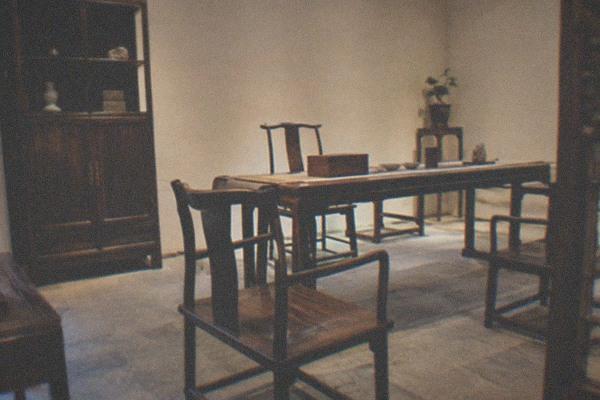
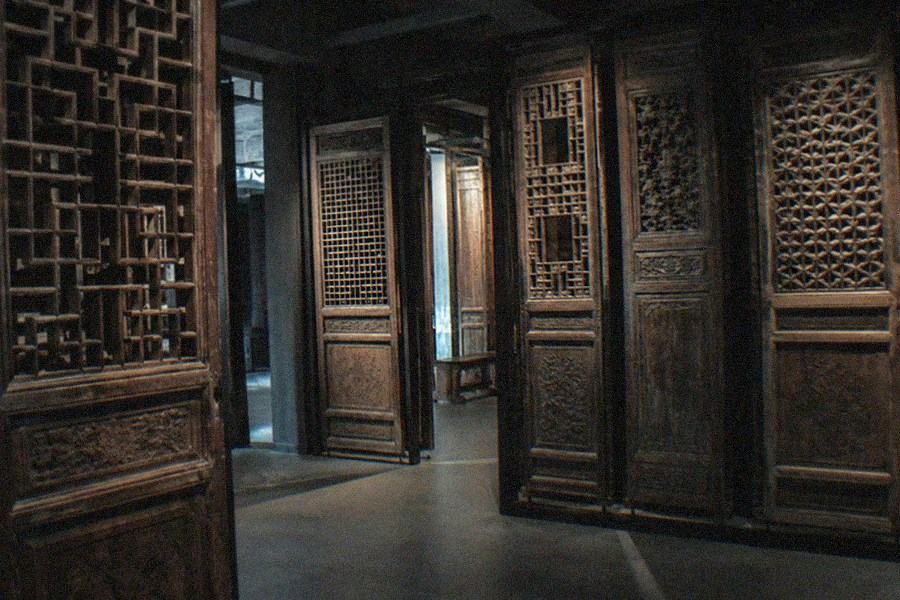
The core of the collection is classical Chinese hardwood furniture from the Ming and Qing dynasties, especially pieces in huanghuali and zitan wood, displayed in room settings rather than behind glass. Around the furniture sit ceramics spanning a wide sweep of Chinese kiln history, a group of oil paintings, and smaller holdings of doors, window lattices and other architectural pieces. The whole museum is browsable in one to two hours.
The furniture is the reason to come. Ming-style chairs, tables, cabinets and beds are shown together the way they would have been used, which lets a visitor see proportion and joinery in context rather than as isolated specimens. The museum's approach is to let the wood speak: dense grain, exposed joinery and restrained line, the qualities collectors prize in classical Chinese furniture. Even a visitor with no background in the subject will notice the difference between this display style and the glass-case norm elsewhere. Everything else covered here is indexed on Beijing Museums.
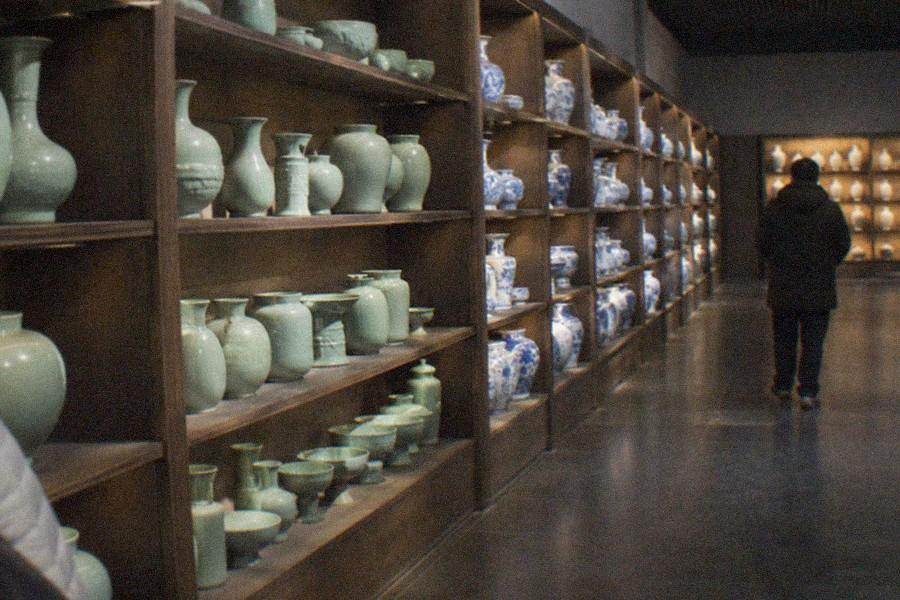
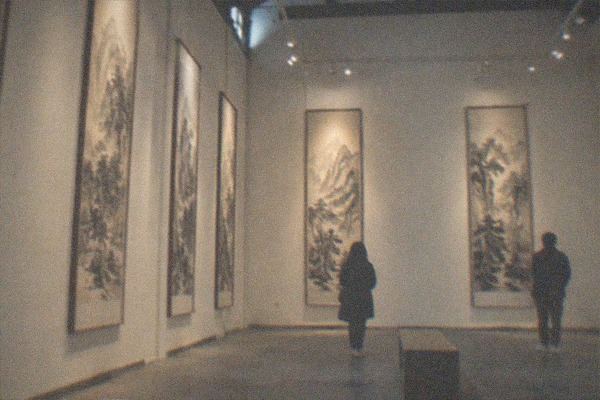
The ceramics run from early pieces through the great kiln traditions, and the museum groups them to show glaze and form evolving rather than to present a complete chronology. The painting holding is smaller and reflects the founder's taste more than any survey ambition. None of this is encyclopedic, and the museum does not pretend to be. It shows what one collector judged worth keeping.
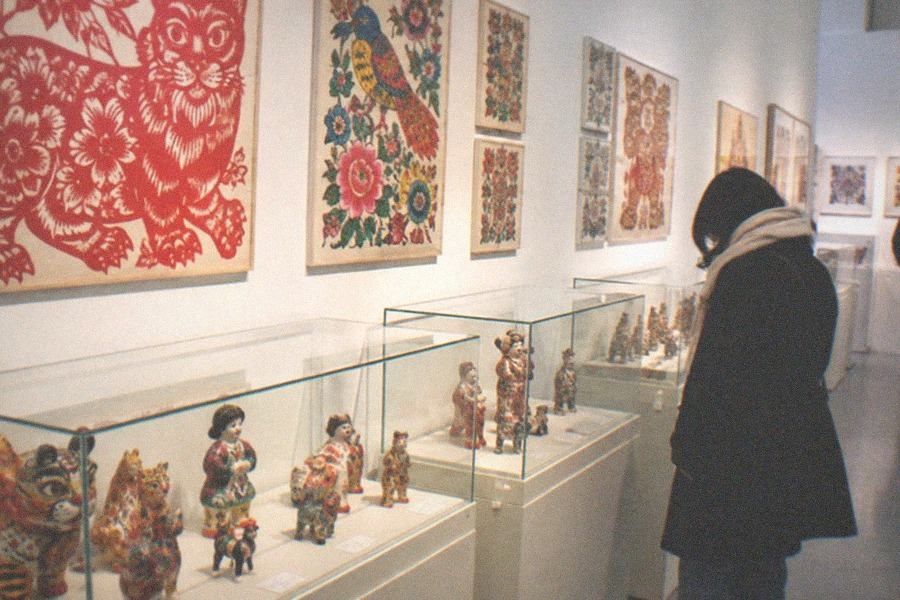
For visitors with children, the museum is a mixed proposition. There is nothing interactive, and the displays ask for quiet looking, which suits older children with a genuine interest and wearies younger ones quickly. Families planning museum days around kids will find better matches in the Beijing museums with kids guide, which ranks venues by how well they hold a child's attention.
Photography rules are typical of a private collection: ask before shooting, and expect restrictions in some rooms. The museum shop and any café arrangements change from season to season, so treat the founder's site as the source of truth for what is open on the day you visit. None of these details are dealbreakers, but they shape the rhythm of a visit, and a visitor who arrives expecting a state-museum infrastructure, cloakrooms, audio guides, multilingual signage, will notice its absence.
How Do You Get There, And When Is The Guanfu Museum Open?
The museum sits in the Dashanzi area of Chaoyang District, on Jinnan Road near the 798 Art Zone, so most visitors pair it with 798 or fold it into a northeast Chaoyang art day. It closes over Chinese New Year, from New Year's Eve through the third day of the holiday, and runs shorter opening hours on Mondays. Because entry needs no reservation, timing stays flexible in a way it does not at the state museums.
The neighborhood is the practical answer to the "when" question. Dashanzi and 798 are gallery territory, and the area's rhythm is late morning through afternoon. Arriving mid-morning on a weekday gives the quietest galleries; weekends bring the 798 crowds, though Guanfu's ticket price keeps its own rooms calm even when the streets outside are busy. A visit fits comfortably in half a day with 798, or in a full art day if you add the Red Brick Art Museum further out in Chaoyang, which charges CNY 120 and also has no third-party booking product.
The Monday question works differently here than at state institutions. National and municipal museums in Beijing close on Mondays as a near-universal rule, and a visitor planning a Monday around a closed museum is making the most expensive planning mistake in the city. Guanfu does not close on Mondays outright: it runs shorter hours that day instead, with the full closure reserved for the Chinese New Year period. If Monday is your only free day, the Beijing museums open on Monday guide lists every venue that will receive you.
Getting there is straightforward by taxi or ride-hailing, and the museum's address on Jinnan Road in Dashanzi is well known to local drivers. Public transport options exist but involve a walk through the district's grid, which is itself part of the 798 experience. Allow more travel time than the map suggests, the area's streets are slow on weekends, and the walk between venues is part of what makes the district pleasant rather than a penalty.
Who Is The Guanfu Museum For, And Who Should Skip It?
The museum is for visitors with a real interest in Chinese furniture, ceramics or collecting culture, for anyone curious about what one collector's eye produces, and for people building an art day around 798 who want a calm hour away from the crowds. It is a poor fit for visitors who want big-name sights, multimedia interpretation, English-heavy signage or a free afternoon, and its CNY 100 door makes it an expensive stop for someone with only casual curiosity.
Put plainly: this is a specialist's museum that tolerates generalists happily but does not court them. The visitor who will love it already knows something about Ming furniture or wants to learn, and is willing to pay for a quiet room and a founder's collection. The visitor who will feel shortchanged is the one expecting a Palace Museum-scale institution, an hour of spectacle, or the free entry that most state museums offer. For that visitor, the imperial sites deliver far more per yuan and per hour.
That contrast is honest, not dismissive. The Forbidden City charges CNY 60 at the door, requires a real-name reservation that opens seven days ahead at 20:00 Beijing time, and sells no same-day tickets at all. A reservation service for it exists from $7 and rates 4.5 across 655 reviews. The Lama Temple charges CNY 25, requires a timed reservation opening seven days ahead, and has a booking product from $10 rated 4.5 across 158 reviews. Both are strictly speaking not museums, the Lama Temple is a working Tibetan Buddhist temple and the Forbidden City is a palace complex, but both deliver the concentrated grandeur Guanfu deliberately avoids.
One more framing helps. The Palace Museum states in writing on its official site that it has not authorized any third-party institutions or individuals to act as ticket agents, and that it sells no same-day tickets. The third-party products linked across this site are reservation services that book the official ticket under the passport details a customer provides, refundable if the official quota sells out first. Both facts belong together, and the same transparency applies in the other direction at Guanfu: no third-party product exists there at all, so the only honest advice is the museum's own channel.
For a trip that balances the imperial must-sees with quieter corners, the 3-day Beijing museum itinerary sequences the reservation-required giants against walk-up venues like this one, and the Beijing museums map shows how far Guanfu sits from the Dongcheng cluster. The site's coverage of free museums in Beijing is the right read for anyone whose budget rules out a CNY 100 door.
However you build the trip, the three most in-demand imperial bookings are below, and all three need advance planning in a way the Guanfu Museum never will.
Common Questions About The Guanfu Museum
What Is The Guanfu Museum And Who Is It For?
It is a private museum of Chinese antiquities in Chaoyang, founded by the collector Ma Weidu, holding classical furniture, ceramics and paintings. It is for visitors with a genuine interest in those objects and in collecting culture, not for visitors seeking grand imperial sights.
How much is Guanfu Museum admission?
CNY 100 at the door. Discounted advance tickets appear online at times, but the full-price door is available on the day.
Do you need to reserve Guanfu Museum tickets in advance?
No. The Guanfu Museum takes walk-up entry with no reservation, one of only six major Beijing museum venues that do.
Can you buy Guanfu Museum tickets online?
There is no third-party booking product for the Guanfu Museum on any platform. The museum's own site and WeChat channel are the only routes, and any online discounts sold there are separate from the walk-up door price.
When is the Guanfu Museum closed?
It closes over Chinese New Year, from New Year's Eve through the third day of the holiday, and runs shorter hours on Mondays. Outside those exceptions it is open through the week.
Is the Guanfu Museum worth it for a casual tourist?
Usually not. At CNY 100 it is one of the city's most expensive museum doors, interpretation is thinner in English than at state museums, and the displays reward prior interest in furniture and ceramics. Visitors wanting spectacle get far more from the imperial sites.