The Palace Museum (Forbidden City) Tickets
from $7 per person, live price on the listing
Check Price & Availability →Opens the official listing with live dates and prices. Book there; nothing is charged on this site.
- Area
- Dongcheng
- Theme
- Imperial Beijing
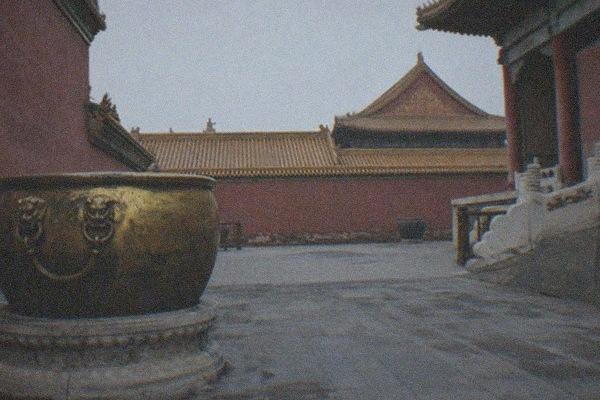
The Hall of Supreme Harmony stands at the exact center of the Palace Museum, the largest surviving wooden palace structure in China and the throne room of 24 emperors across the Ming and Qing dynasties. Its raised triple terrace, bronze cranes and turtles, and gilded throne face south down the whole ceremonial axis of the Forbidden City, from the Meridian Gate through three great courtyards to the northern Gate of Divine Prowess. Around that axis spread more than 1,800,000 square meters of courtyards, side palaces, gardens and galleries holding one of the largest collections of imperial art and artifacts on earth. This is a museum you cross rather than visit, and the planning questions are practical ones: what a ticket costs, how the reservation window works, and how much of the day to give it.
How Much Do Forbidden City Tickets Cost?
General admission to the Palace Museum is CNY 60 per adult at the door price. Two galleries inside, the Treasure Gallery and the Clock Gallery, are separate paid add-ons at CNY 10 each on the museum's own figures. A reservation service that books the official ticket under your passport is available from $7 through the booking panel above this page.
The CNY 60 figure is the standard adult admission. Concession prices exist for children, students and seniors, and the museum publishes the full schedule on its own ticketing pages. The two add-on galleries are worth budgeting for: the Treasure Gallery in the Palace of Tranquil Longevity holds the Qianlong emperor's private jade and gold collections, and the Clock Gallery displays hundreds of ornate 18th-century timepieces, many still wound and running.
Keep the two transaction types separate in your head. The CNY 60 is what the museum itself charges for entry. The $7 from-price is what a third-party reservation service charges to make the official real-name booking on your behalf, which matters for visitors who cannot or do not want to operate the Chinese-language booking system themselves. The Palace Museum has stated publicly that it has authorized no third-party ticket agents, and that warning deserves to sit next to the service rather than instead of it: the listings this site carries are booking services that reserve the official ticket under your passport details, not resellers holding their own inventory.
| Ticket | Price | Notes |
|---|---|---|
| General admission (adult) | CNY 60 | Door price, real-name reservation required |
| Treasure Gallery add-on | CNY 10 | Official museum figure, paid separately |
| Clock Gallery add-on | CNY 10 | Official museum figure, paid separately |
| Reservation service | from $7 | Books the official ticket under your passport |
There is no combined ticket that covers everything. Decide before you enter whether the two galleries are in your day, because once you are inside the complex, backtracking across the full east-west span of the palace to reach them is a long walk in the wrong direction.
How Does The Reservation System Work?
Every visitor must hold a real-name reservation made in advance. The booking window opens exactly 7 days ahead of your visit date, at 20:00 Beijing time, and there are no same-day tickets and no on-site ticket sales at all. If you arrive at the Meridian Gate without a reservation, you will be turned away.
This is the single most important fact about visiting the Forbidden City, and it is why the museum's own booking channel at https://bookingticket.dpm.org.cn/ is where the official tickets live. Each evening at 20:00 Beijing time, the slots for the date seven days out are released. Popular dates, weekends, and Chinese public holidays sell through quickly once released, so set an alarm for 20:00 if you are booking a date you cannot flex.
Foreign visitors can book using a passport, and the reservation is tied to that document number. You must carry the original physical passport you booked with, not a photocoy or a phone picture, because identity checks at the gate match the document to the reservation. The museum does not operate a passport counter or a same-day fallback of any kind. This is also why the third-party reservation services ask for passport details at the time of booking: they are making the official real-name reservation under your document, and you still present that same passport at entry.
The daily visitor quota is capped by the museum, and the cap is a real constraint on peak dates, but the Palace Museum does not publish the number. What matters practically is the pattern: slots for ordinary weekdays are usually obtainable within the 7-day window, while holiday periods and weekends can exhaust their quota shortly after the 20:00 release. If your dates are fixed and fall on a holiday, be ready at the release moment.
One planning note worth internalizing: the reservation is date-specific. You cannot arrive a day early or a day late and use it. Build your Beijing itinerary around the date you actually secured, not the date you hoped for.
What Will You Actually See Inside?
The Palace Museum is a full imperial city, not a single building. The core route runs south to north from the Meridian Gate through the three great ceremonial halls, then past the residential palaces to the Imperial Garden and out the northern gate. Most visitors spend three to four hours on that axis alone.
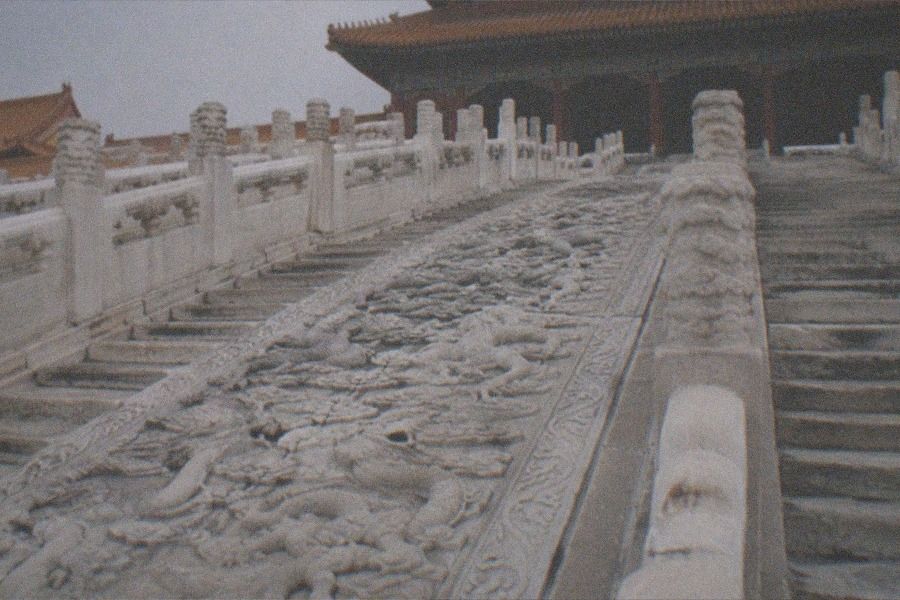
The three ceremonial halls sit on a shared marble terrace. The Hall of Supreme Harmony is the largest, used only for the grandest occasions: enthronements, imperial weddings, New Year audiences. Behind it, the Hall of Central Harmony was the emperor's preparation room, and the Hall of Preserving Harmony hosted the final stage of the imperial examinations and later state banquets. The giant carved ramp stone on the terrace's rear stairway, transported to Beijing on an ice-sled road in the Ming dynasty, is one of the most photographed single objects in the complex.
North of the ceremonial zone are the living quarters: the Palace of Heavenly Purity, where Ming and early Qing emperors actually slept, and the Palace of Earthly Tranquility, which served as the empress's residence and the imperial wedding chamber. The Imperial Garden at the northern end is a compact walled landscape of ancient cypresses, rockeries and pavilions, and it funnels everyone toward the exit onto Jingshan Front Street.
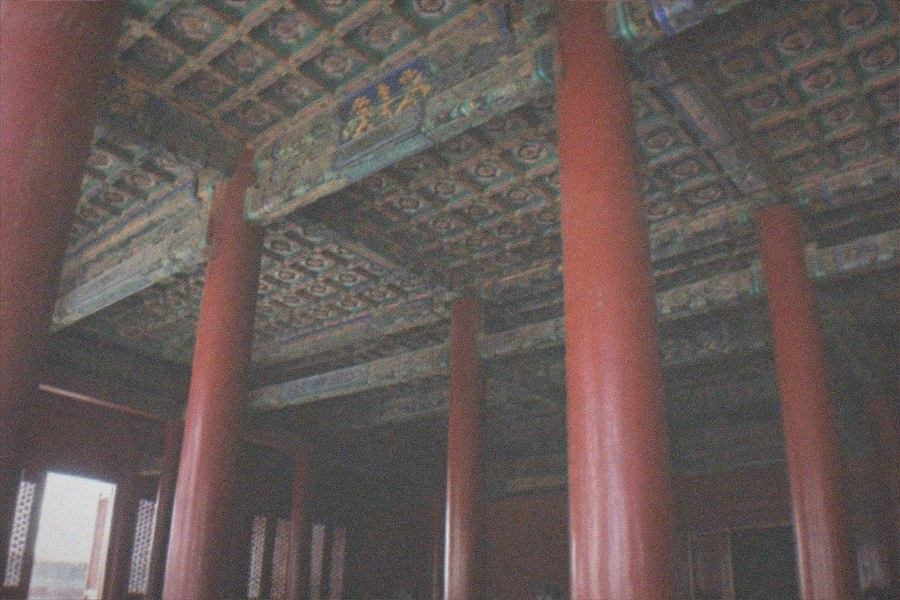
The side complexes reward the time you give them. The Palace of Tranquil Longevity in the northeast, built for the Qianlong emperor's retirement, contains the Treasure Gallery and its extraordinary jade mountain carvings. The western routes include the Hall of Mental Cultivation, the emperor's office and audience room for much of the Qing dynasty, preserved with the original throne screen and cloisonné furnishings. If your legs allow it, the western side palaces are dramatically quieter than the axis, and the contrast is part of the experience.
Two practical realities shape any visit. The complex is enormous, and the distances are real: the walk from the Meridian Gate to the Imperial Garden alone is roughly a kilometer, almost all of it on stone. Wear shoes built for that, and bring water, because shade inside the courtyards is limited in summer.
How Should You Plan Your Visit?
Allow half a day as a minimum, and a full day if you want the side palaces and both paid galleries. The museum is closed on Mondays, except statutory holidays. It sits in the Dongcheng district at 4 Jingshan Front Street, and reservations open 7 days ahead at 20:00 Beijing time.
The sequencing matters as much as the duration. Enter from the north side of Tiananmen Square through the Meridian Gate, walk the axis south to north, and exit at the north gate. Doing it in reverse is not possible, because entry is one-way. Once you exit, you cannot re-enter on the same ticket, so finish everything inside before you leave.
The classic exit move is to cross the street and climb Jingshan Park's hill directly opposite the north gate, which gives the single best elevated view over the entire palace roofscape. Budget thirty minutes for it. From there, the Beihai Park lake and gardens are a short walk west, which turns a museum morning into a full imperial-Beijing day.
Time of day matters less than day of week. Midweek visits spread the crowds better than weekends, and the first hour after opening is the calmest window on the central axis. Monday is the trap: the museum closes every Monday except statutory holidays, and a Monday arrival in Beijing is the most common planning mistake visitors make with this venue.
| At a glance | Detail |
|---|---|
| Address | 4 Jingshan Front Street, Dongcheng District, Beijing |
| Area | Dongcheng |
| Closed day | Monday (except statutory holidays) |
| Reservation required | Yes, mandatory for every visitor |
| Reservation window | Opens 7 days ahead, at 20:00 Beijing time |
| Same-day or on-site tickets | None at all |
| How long to allow | Half a day minimum; a full day with the galleries |
If your travel dates are still open, check availability on the booking panel above before you lock the rest of your itinerary around a specific day. The reservation date, once secured, becomes the fixed point of your Beijing schedule.
How Do You Get There?
Arrive by Metro. The Forbidden City sits on Beijing's central axis, and the surrounding streets are heavily controlled, with vehicle access around Tiananmen Square restricted and security checkpoints on every approach. Walking from the nearest Metro stations is the standard way in for both locals and visitors.
Expect a security screening with bag x-ray before you reach the Meridian Gate area, and allow extra time for it on busy days, because queues form at the checkpoints themselves rather than only at the museum gate. Bring the passport you booked with, since it is checked at entry.
Beijing's Metro network is the practical backbone of any museum-hopping itinerary in this city, and the operator's own site at https://www.bjsubway.com/ carries the current line map, fares and station information in one place. Fares are low, signage includes English, and every major venue on this site is reachable by Metro with at most one transfer.
Taxis and ride-hailing work but drop you at the outer edge of the restricted zone, which still leaves a walk to the gate. Driving yourself is the weakest option: parking near the palace is scarce, controlled and not worth the effort when the Metro covers the approach so well. Cycling is popular in Beijing and the hutong streets east of the palace are pleasant to ride, but you will still park the bike and walk through the checkpoints.
Build the security queue into your timing. If your reservation is for the first entry slot of the day, arriving twenty minutes early is wise; the checkpoint line can be the longest line of your morning.
What Else Is Nearby And Worth Pairing?
Dongcheng and the districts around the palace hold several of Beijing's best museum visits. The Lama Temple, Prince Gong's Mansion and the Summer Palace all sit within easy reach, and each pairs naturally with a Forbidden City day or fills a second day on the same reservation-first rules.
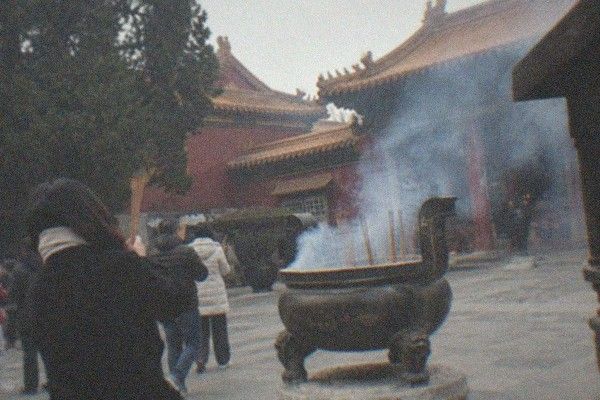
Closest at hand, the Lama Temple (Yonghegong) is Beijing's most magnificent working Tibetan Buddhist temple, a short Metro ride northeast of the palace, with incense courts, a 26-meter Maitreya Buddha carved from a single sandalwood trunk, and its own advance reservation system. It makes a strong half-day pairing with the Forbidden City for anyone interested in imperial religion as well as imperial power.
West of the old city, Prince Gong's Mansion preserves the grandest surviving Qing princely residence, with a celebrated garden and the Huxin Yan theater pavilion. It is a quieter, more domestic counterpoint to the palace's scale, and its reservation window opens 10 days ahead at 20:00 Beijing time, so it can be booked even earlier than the Forbidden City itself.
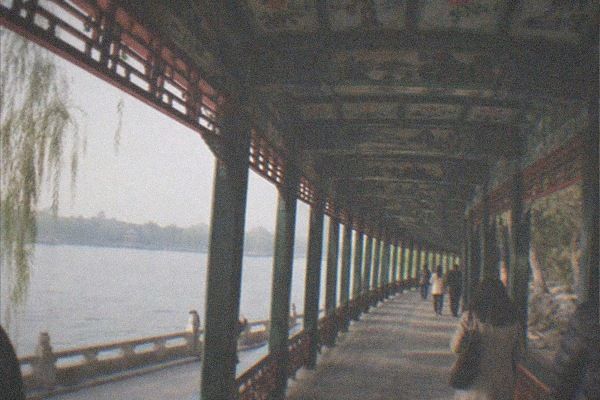
For a full second day, the Summer Palace in Haidian is the imperial retreat to the palace's seat of power: Kunming Lake, the Long Corridor with its thousands of painted scenes, and the Tower of Buddhist Incense on Longevity Hill. Allow the better part of a day, and note that the inner halls there close on Mondays except public holidays, the same weekly rhythm that catches out Forbidden City visitors.
Back in the immediate neighborhood, Jingshan Park and Beihai Park are both imperial gardens within walking distance of the north gate, and neither demands anything like the palace's planning. If your Forbidden City reservation lands on a morning, the hill at Jingshan plus an afternoon at Beihai is the most natural single-day sequence in central Beijing.
Questions People Ask
Can I buy a Forbidden City ticket at the gate?
No. The Palace Museum sells no same-day tickets and no on-site tickets at all. Every visitor must hold a real-name reservation made in advance, and entry is checked against the original passport used at booking. Arriving without a reservation means being turned away at the Meridian Gate.
How many days ahead do Forbidden City tickets open?
The booking window opens exactly 7 days ahead of your visit date, at 20:00 Beijing time each evening. Popular dates, weekends and Chinese public holidays can exhaust their quota quickly after release, so be ready at the release moment if your dates are fixed.
Is the Forbidden City open on Mondays?
No. The museum is closed every Monday, except statutory holidays, when it stays open. This is the most common planning mistake visitors make, so check your calendar against the Chinese holiday schedule before fixing your reservation date.
Does a foreign passport work for booking?
Yes. Foreign visitors can make the real-name reservation using a passport, and the reservation is tied to that document number. You must carry the original physical passport on the day, since gate checks match the document to the booking. Third-party reservation services book under the same passport details.
How much does it cost to get in?
General admission is CNY 60 per adult at the door price. The Treasure Gallery and Clock Gallery inside are separate add-ons at CNY 10 each. A reservation service that books the official ticket under your passport is available from $7 through the booking panel above this page.
How long should I allow for a visit?
Half a day at minimum for the central axis and main halls, and a full day if you want the side palaces, the Imperial Garden and both paid galleries. The complex is vast and almost entirely stone underfoot, so comfortable shoes matter as much as the clock.
Can I leave and come back in?
No. Entry is one-way, south to north, and once you exit through the north gate you cannot re-enter on the same ticket. Finish everything you want to see inside before leaving, and plan the Jingshan Park hill view for after your exit.
Has the Palace Museum authorized third-party ticket agents?
No. The museum states it has authorized no third-party institutions or individuals to act as ticket agents, and advises booking through its official channels. The reservation services carried on this site are booking services that make the official real-name reservation under your passport, and both facts are stated here together.
Other Imperial Museums Worth A Look
Lama Temple (Yonghegong)
Dongcheng
from $10 per person, live price on the listing Check availability →
Questions About Forbidden City
- How Much Is A Forbidden City Entry Ticket?
- Can You Buy Forbidden City Tickets At The Gate?
- How Much Time Do You Need In The Forbidden City?
- Is It Worth Going Inside The Forbidden City?
- Why Is It Called The Forbidden City?
- Does Anyone Still Live In The Forbidden City?
- How Many Rooms Are In The Forbidden City?
- Do You Need A Separate Ticket For The Forbidden City Treasure Gallery?