How Much Time Do You Need In The Forbidden City?
A realistic time budget for the Palace Museum: how long the main axis takes, what the side galleries add, and how to plan a full day around the visit.
How Much Time Do You Need In The Forbidden City?
Plan on four to five hours inside the Forbidden City for a first visit covering the main axis plus one or two side galleries, and closer to six if you want the Treasure Gallery and the Gallery of Clocks without rushing. A fast, gallery-free walk down the central route takes about two hours, but anything less means skimming, and the quiet beauty of the Imperial Garden and western palaces sits in the route's final third.
The honest answer depends on what kind of visitor you are, and the difference between visitor types is bigger than most guidebooks admit. The Palace Museum is not one building but a walled complex of halls, courtyards, gates and gardens laid out on a north-south axis roughly a kilometre long, and the distance itself sets the floor. You enter at the Meridian Gate on the south side, you exit through the Gate of Divine Prowess on the north side, and the route only runs one way. There is no looping back, and there is no shortcut once you are inside.
Start with the fixed costs. Security at the Meridian Gate moves quickly most days but has real queues in peak season and on national holidays, so budget fifteen to twenty minutes from the end of the line to the moment you are standing in the first courtyard. Ticket checking is by passport or ID at the gate, since the museum sells no same-day tickets at all and every entry is a pre-made real-name reservation. If you arrive without a booking, there is no counter that can fix that, which is why the reservation question matters more to your day than any pacing decision inside.
The Palace Museum states plainly on its official site that it "has not authorized any third-party institutions or individuals to act as ticket agents," and that all tickets must come through its official WeChat mini-program and website, where booking opens 7 days ahead at 20:00 Beijing time. That is the museum's own position and it should sit next to any reservation service you are considering: the third-party products on this site are services that make the official reservation under the passport details you provide, refundable if the official quota for your date sells out first. The two facts belong together, and a day planned around a sold-out date is a day lost.
For pacing, think in three layers. The first layer is the axis itself: the Hall of Supreme Harmony, the Hall of Central Harmony, the Hall of Preserving Harmony, then the Palace of Heavenly Purity, the Palace of Union and the Palace of Earthly Tranquility, ending in the Imperial Garden. The second layer is the side galleries, chiefly the Treasure Gallery and the Gallery of Clocks in the eastern palace compounds, each of which is a paid add-on at 10 CNY bought on top of general admission. The third layer is the western route, the Hall of Mental Cultivation and the quieter western courtyards, which many first-timers skip and many second-timers call the best part.
If your time is short, the question is not really how much you need but what you are willing to cut, and the answer to that is almost never the axis. The three great halls are the reason the site is a World Heritage property, and the courtyard in front of the Hall of Supreme Harmony is the single largest space inside the walls. Cut the galleries before you cut the garden, and cut the garden before you cut the halls.
For more on what a ticket costs and what it includes, see our breakdown of how much a Forbidden City entry ticket is, and for the add-on galleries specifically, whether the Treasure Gallery needs a separate ticket.
What Does The Standard North-South Route Cover?
The standard north-south route runs from the Meridian Gate through the three great halls, the three rear palaces and the Imperial Garden before exiting at the north, covering the Forbidden City's ceremonial core in about two hours at a steady walk with photo stops. Because the route is one-way, that figure assumes you skip the side galleries entirely; add an hour for the western palaces and you have a half-day visit.
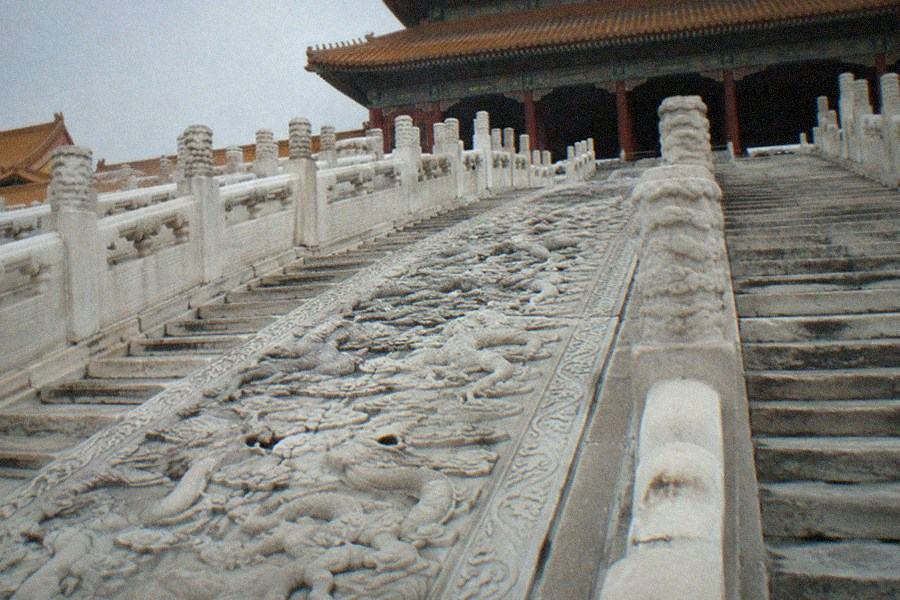
Walk it and you understand why the timing works the way it does. The first stretch, from the Meridian Gate across the great courtyard to the Hall of Supreme Harmony, is the most crowded part of the whole complex, because every single visitor passes through it and most stop for the classic photographs. The Golden Water River bridges, the marble carving on the imperial way, the view up the steps to the throne hall: this is where tour groups bunch up, and where your pace is set by the crowd rather than by you.
The middle stretch is faster. The Hall of Central Harmony and the Hall of Preserving Harmony sit close together, and after the third hall the crowd thins noticeably as casual visitors turn back toward their buses or drift east. The Palace of Heavenly Purity and its two companions hold the imperial living quarters, and here the interiors you can actually enter, beds, screens, clocks and thrones behind glass, slow people down again. Budget thirty to forty minutes for this middle third if you like looking at interiors.
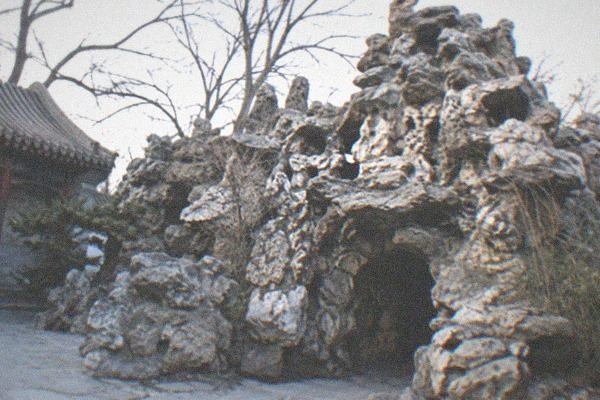
The Imperial Garden at the north end is small, a couple of acres of cypresses, rockeries and pavilions, and it deserves unhurried time precisely because it is the end of the line. Visitors who arrive here with twenty minutes left before their group departs see it as a corridor to the exit. Visitors who arrive with an hour see the oldest trees in the complex and the two matched pavilions that frame the axis. The difference is entirely a function of how the earlier hours were spent.
A realistic time budget by visitor type:
| Visitor type | Route | Realistic time | What you give up |
|---|---|---|---|
| The transit stop | Main axis only, no interiors | 2 hours | All galleries, the western route, any lingering |
| The half-day visit | Axis plus one side gallery | 3 to 4 hours | Either the Treasure Gallery or the Clock Gallery, not both |
| The full visit | Axis, both paid galleries, western palaces | 5 to 6 hours | Nothing inside the walls |
| The deep visit | Everything, plus breaks and the western route at length | 6+ hours | You will need the stamina; seating is scarce |
The one-way flow is the constraint that surprises people most. Once you pass through the Gate of Heavenly Purity into the rear palace section, you cannot return to the great halls, and once you exit the Gate of Divine Prowess you cannot re-enter on the same ticket. Plan your water, your snacks and your restroom stops around that geometry: facilities sit along the western side of the route, and the largest ones are near the middle of the complex.
One planning note that pairs with the timing: the museum is closed on Mondays except statutory holidays, a closure pattern shared by most national museums in the city, and covered in our guide to Beijing museums open on Monday. A Monday arrival in Beijing is the one scenario where no amount of time budgeting helps, because the doors do not open at all.
How Long Does The Visit Get With The Treasure Gallery And Clock Gallery?
Count on ninety minutes to two hours for both paid galleries done properly, which turns a two-hour axis walk into a four-hour visit. The Treasure Gallery alone holds most visitors for forty-five minutes to an hour, and the Gallery of Clocks for about half an hour. Both are bought as 10 CNY add-ons on the day, inside the complex, on top of the general admission you reserved in advance.
The Treasure Gallery sits in the eastern palace compounds, in the Ningshou Gong quarter that the Qianlong emperor built for his retirement, and it is the densest concentration of imperial objects anywhere inside the walls. The jade, the gold, the imperial seals and the famous pieces of hardstone carving are arranged in a sequence of halls, and the crowd moves through them at museum pace rather than sightseeing pace. This is standing-and-looking time, not walking time, which is why it adds more to the clock than its floor area suggests. More of these guides are collected on Beijing Museums.
The Gallery of Clocks is smaller and faster, a hall of ornate timepieces, many of them European-built gifts to the Qing court, in gilt cases with automaton mechanisms. Half an hour is enough unless you arrive during a demonstration, when the crowd stalls and the hall becomes one of the slowest rooms in the complex. The two galleries are a short walk apart, so doing both in one swing of the eastern route is natural and avoids backtracking.
The timing decision that matters most is when to leave the axis for the east. The classic mistake is turning east too early, doing the galleries first, and then rejoining the axis behind the thickest crowds with less energy for the rear palaces. The better sequence for most visitors is the reverse: take the axis at your own pace, turn east after the Hall of Preserving Harmony or after the rear palaces, then return to the Imperial Garden for a slow finish. The route allows both orders, and your legs will tell you which one you chose.
If the galleries are the point of your visit rather than an add-on, plan the day around them and let the axis be the bonus. Four hours with both galleries and a relaxed walk is a better day than six hours of hall-hopping with gallery fatigue at the end.
When Is The Best Time Of Day To Enter?
The first entry slot of the morning is the best time, because the great southern courtyards stay comparatively clear for the first ninety minutes and the light on the golden roofs is at its best. Midday entry means walking the axis with the thickest crowds and finishing in the quieter north late in the day. The museum stops admitting visitors well before closing, so a late start shrinks the visit even if the calendar says there were hours left.
Morning entry has a second advantage that matters for timing: it front-loads your energy. The southern courtyards are the most demanding part of the visit, the most crowded and the most exposed, and doing them before fatigue sets in is the difference between a good day and a march. Visitors who enter at midday hit the same crowds with half their stamina already spent on the queue.
The afternoon has one genuine strength. As groups peel off for their buses, the northern sections, the western palaces and the Imperial Garden empty out, and the last hour inside the walls is often the calmest. A late entry trades the best light and the emptiest southern courtyards for an empty finish, and for photographers that trade can be worth making in off-peak season. In peak season it is not: the admission cutoff arrives faster than the crowds thin.
Season changes the math too. The complex is outdoors for nearly the whole route, with the interiors a small fraction of the walking time, so summer heat and winter cold both shorten what people can comfortably do. In July and August, plan the axis for the morning, a long shaded break in the eastern galleries at midday, and the northern sections after. In winter, the low sun makes the southern courtyards magnificent in the morning and frigid by three in the afternoon, so an early start pays twice.
A sample half-day schedule built around a morning entry:
| Time | Where | Notes |
|---|---|---|
| 08:20 | Meridian Gate queue | Security moves fast off-peak; twenty minutes in peak season |
| 08:45 | First courtyard and Golden Water bridges | The clearest photo window of the day |
| 09:00 | Three great halls | Crowd builds here by ten |
| 10:00 | Rear palaces | Interiors slow the pace; rest before the east turn |
| 10:45 | Treasure Gallery | 10 CNY add-on, bought inside |
| 11:45 | Gallery of Clocks | 10 CNY add-on, a short walk north |
| 12:15 | Imperial Garden | Calmest hour of the visit |
| 12:45 | Gate of Divine Prowess exit | Jingshan Park is directly opposite |
That schedule lands you at the north exit around lunchtime with the whole afternoon free, which is the natural segue to the next question.
Can You Combine The Forbidden City With Another Sight In One Day?
Yes, comfortably, if you treat the Forbidden City as a half-day and pair it with one nearby sight rather than two: Jingshan Park directly opposite the north exit for the classic rooftop panorama, or the National Museum of China across the square for a free but reservation-only afternoon. A Forbidden City morning plus a Summer Palace afternoon is possible but rushed, and the Summer Palace deserves its own half-day.
The geography makes the pairings obvious. The north exit opens onto Jingshan Park, whose hill takes twenty minutes to climb and gives the single best view over the golden roofs you just walked through. Doing Jingshan immediately after the exit is the natural finish, costs almost no extra travel time, and is the pairing that fits any energy level. Beihai Park sits a short walk west of Jingshan and turns the morning into a full central-Beijing day without a single taxi.
The southern pairing is the National Museum of China, free to enter but strictly reservation-based, with slots opening 7 days ahead at 17:00 Beijing time, and closed on Mondays except statutory holidays. An afternoon there after a morning in the Palace Museum is a heavy museum day, but the two sit within walking distance of each other across Tiananmen Square, and the contrast of imperial interiors and national galleries is the best single-day museum program in the city. Our guide to free museums in Beijing covers the reservation mechanics.
The Summer Palace pairing deserves a caution. It is the most tempting combination on the map, an imperial palace morning and an imperial garden afternoon, and it works only if the Forbidden City half is genuinely a half. The Summer Palace is vast, its own corridors and hills and lake take hours, and its inner halls such as the Tower of Buddhist Incense close on Mondays except public holidays, so the same Monday trap applies twice. Visitors who try both in one day in summer usually end up seeing the Summer Palace from a boat with sore feet.
The Lama Temple is the easier second stop, a compact Tibetan Buddhist temple complex in Dongcheng, 25 CNY at the door, with timed entry opening 7 days ahead. It is not a museum, and it should not be planned like one, but ninety minutes there after a Forbidden City morning is a realistic and rewarding day, and the two bookend the imperial and religious sides of the city's history. For the distinction, see whether the Lama Temple counts as a museum.
Whatever the pairing, protect the reservation first and the pacing second. The Forbidden City date is the hard constraint in the plan: it opens for booking 7 days out at a fixed evening hour, popular dates sell out, and everything else in the day can be shuffled around it. Book the palace, then build the day.
A second reservation option for a fuller imperial day:
Common Questions About Forbidden City Visiting Time
How Much Time Do You Need In The Forbidden City?
Four to five hours for a first visit covering the main axis and one or two side galleries, closer to six if you want both paid galleries done properly. A fast, gallery-free walk down the central route takes about two hours. The route is one-way, so there is no recovering lost time once you are inside.
Can you see the Forbidden City in two hours?
You can walk it in two hours, along the axis from the Meridian Gate to the northern exit, but you will skip the Treasure Gallery, the Gallery of Clocks and the western palaces entirely. Two hours is a legitimate choice for a tight transit day, not a full visit.
How much time do the Treasure Gallery and Clock Gallery add?
About ninety minutes to two hours for both. Each is a 10 CNY add-on bought inside the complex on top of your reserved general admission. The Treasure Gallery holds most visitors for forty-five minutes to an hour, the Gallery of Clocks for around half an hour.
What is the best time of day to visit?
The first morning slot. The southern courtyards stay comparatively clear for the first ninety minutes, the light is best, and you spend your energy where the crowds are thickest. A midday start means walking the axis with peak crowds and a shrinking admission window at the end.
Can you leave and re-enter on the same ticket?
No. Entry is one-way and single-use: once you exit through the Gate of Divine Prowess you cannot go back in, and once you pass the Gate of Heavenly Purity you cannot return to the great halls. Plan water, food and restroom stops around that geometry.
Can you combine it with Jingshan Park?
Yes, and it is the natural pairing. Jingshan sits directly opposite the north exit, the climb takes about twenty minutes, and the hilltop view over the palace roofs is the standard finish to a morning visit. Add Beihai Park to the west for a full central-Beijing day on foot.