Is The China Science And Technology Museum Worth It For Adults?
An honest look at whether the China Science and Technology Museum in Chaoyang rewards adult visitors: what is inside, how hard the ticket is, and how it compares with Beijing's other science museums.
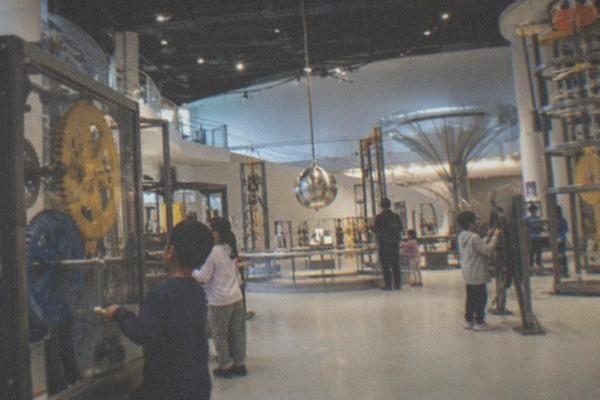
Beijing's biggest science museum sits in the Olympic Green area of Chaoyang District, a short walk from the venues built for the city's Olympic Games. It is enormous, modern, and overwhelmingly described in English-language travel content as a place to take children. That framing puts off a lot of adult travelers, who assume the exhibits will be pitched at a ten-year-old and skip it entirely. The honest answer is more interesting than that: the museum has genuinely adult material, a few genuinely childish corners, and a reservation system that trips up more visitors than the content ever does.
Is The China Science And Technology Museum Worth It For Adults?
Yes, for most adult visitors it earns its CNY 30 door ticket, with two conditions attached. First, go for the main exhibition hall's four themed floors rather than the Children's Science Paradise, which is built for ages 3 to 8. Second, you must reserve ahead: booking opens 7 days in advance at 18:00 Beijing time, quantities are limited, and the museum closes on Mondays except statutory holidays.
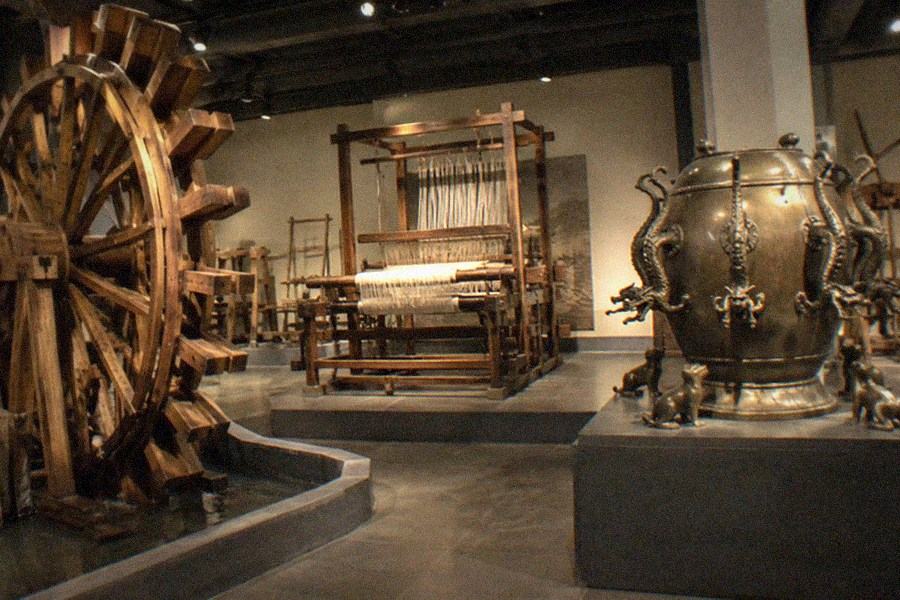
The main hall is the part that matters to an adult. It runs four floors, one themed exhibition each, moving from ancient Chinese invention to open research questions. The ground floor, Glory of China, is the strongest single reason for an adult to come: full-scale working reconstructions of Song and Ming dynasty machinery, including an animated water-powered astronomical clock, a giant armillary sphere, and a loom that runs on schedule. The interpretive material is dense, and the craftsmanship of the reconstructions is the kind of thing you stand in front of for a long time rather than glance at.
The middle floors, Exploration and Discovery, Science and Life, and Challenges and the Future, are a mix. Some displays are hands-on button-pressing stations designed around school groups. Others are genuinely good: exhibits on quantum communication, deep-sea submersibles, and China's space program carry real hardware and real engineering detail, not just posters. An adult with any interest in how a country presents its own technological history will find these floors read almost as a curated statement about national priorities, which is a different and arguably richer experience than the science itself.
What the museum is not, for an adult, is a Western-style science center where every gallery assumes an adult attention span. School groups move through in loud waves on weekdays, and the hands-on stations queue up badly at those moments. Late afternoon on a weekday, or any session on a weekend after the morning rush, is a different building entirely: quieter, walkable, and much easier to enjoy at adult pace. The museum's own visitor guidance notes that the main hall suits all ages while the Children's Science Paradise is explicitly for children aged 3 to 8 accompanied by adults, with separate morning and afternoon sessions sold separately, a distinction worth taking seriously when you plan.
If the four floors sound like your kind of thing, the practical question becomes the ticket, and that is where a little help is worth having.
What Is Actually Inside The Main Exhibition Hall?
Four themed floors, ticketed as one main hall: Glory of China (ancient invention), Exploration and Discovery (physics and life sciences), Science and Life (technology in daily life), and Challenges and the Future (energy, space, and frontier research). Separate tickets buy the Children's Science Paradise, the dome and giant-screen theatres, and short-run exhibitions. The CNY 30 door price covers the main hall only.
The Glory of China gallery is the one that surprises adults. It is not a display case of artifacts behind glass; it is a working reconstruction floor. The centerpiece is a reimagining of Su Song's eleventh-century astronomical clock tower, a ten-metre machine that combined a water wheel, an escapement mechanism, and a rotating celestial globe, and it runs. Standing in front of a functioning reconstruction of a device designed roughly nine hundred years before the industrial revolution is a genuinely rare museum experience, in Beijing or anywhere else.
Exploration and Discovery covers classical physics, mechanics, and the life sciences, and this is the most kid-weighted floor. Expect pendulums, mirrors, plasma balls, and a lot of children testing each one at maximum volume. Adults who enjoy the history-of-science angle can still get something from the layout, which arranges the stations by concept rather than by gimmick, but this is the floor to move through quickly if a school group arrives.
Science and Life looks at how technology sits inside ordinary Chinese households and cities: transit systems, agricultural engineering, medical imaging, and network infrastructure. Challenges and the Future is the space and energy floor, and it is where the museum's serious hardware lives, including hardware related to China's crewed space program. For an adult traveler, this floor plus the ancient-invention floor form the real substance of a visit, and together they justify two to three hours on their own.
| Floor | Theme | What an adult gets out of it |
|---|---|---|
| 1 | Glory of China | Working reconstructions of Song and Ming machinery, including Su Song's astronomical clock tower |
| 2 | Exploration and Discovery | Classical physics and life-science stations, heavily used by school groups |
| 3 | Science and Life | Urban infrastructure, agriculture, and medical technology in daily Chinese life |
| 4 | Challenges and the Future | Space program hardware, energy research, and frontier science displays |
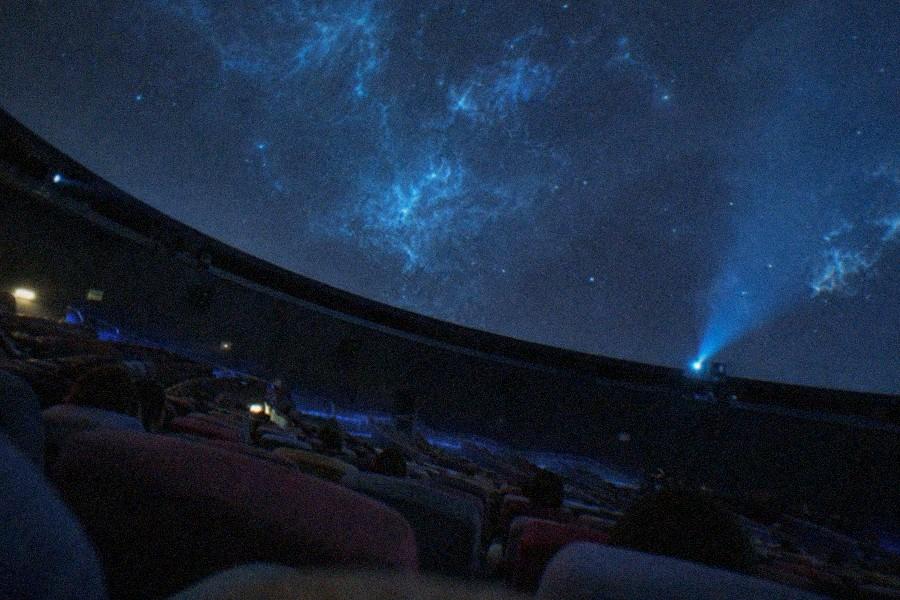
The theatres are a separate decision. Dome, giant-screen, 4D, and motion-simulation screens are each ticketed by session, on top of the main hall ticket. Reviews from adult visitors suggest the giant-screen documentaries are the best of these, while the 4D and motion theatres lean young. If you add one, add the giant screen and skip the rest unless you are traveling with children.
How Hard Is It To Get A Ticket As A Foreign Visitor?
You must reserve in advance: there is no reliable walk-up for general visitors, and the booking window opens 7 days ahead at 18:00 Beijing time through the museum's official site and WeChat channels, with limited presale quantities that stop when sold out. A foreign passport is the document you register under. The museum closes Mondays except statutory holidays, so a Monday plan fails entirely.
The official channel is the museum's own site and its WeChat accounts, and the presale is genuinely limited: the museum's own ticketing guidance says sales open seven days before the visit at 18:00 and stop when the quota is exhausted. Weekend and holiday sessions for the main hall do sell out, especially in summer. If you are comfortable working through a Chinese-language booking flow with a passport number, the direct route costs the CNY 30 door price and works.
Many adult travelers are not comfortable with that flow, and that is the honest case for the reservation-service products this site lists. The product for this museum starts at $21: you supply passport details, the provider makes the real-name reservation through official channels on your behalf, and you enter with the passport that matches the booking. It is a service fee on top of the official ticket, not a discount, and it is worth knowing the museum itself warns against unauthorized reselling, a warning that applies to ticket touts rather than to passport-based reservation services of the kind described here. Weigh the convenience against doing it yourself for the door price.
One planning note that matters more than the ticket: the Children's Science Paradise and the theatres are sold by session, morning and afternoon separately. Adults visiting the main hall only do not need to think about sessions, but if you add a giant-screen film, pick your session when you reserve, because same-day session changes are not guaranteed.
What Do Adult Visitors Actually Say About It?
The pattern in reviews is consistent: adults rate the ancient-invention floor and the space hardware highly, and rate the hands-on middle floors lower because of school-group crowds. The reservation process draws more complaints than the exhibits do. The museum's product rating runs 4.1 across 10 reviews, a small base but one that matches the broader pattern of praise for content and frustration with logistics.
The complaints worth taking seriously are about crowding, not content. Weekday mornings bring organized school groups through the middle floors, and the noise level on Exploration and Discovery in particular has been described in guest reviews as overwhelming. Adults who visited late on a weekday, or timed their visit against the group schedule, describe the same galleries completely differently. The lesson is not to avoid the museum; it is to avoid the museum between roughly 09:30 and noon on a school day.
The praise concentrates where you would expect. The Su Song clock reconstruction, the armillary sphere, and the space floor come up repeatedly in reviews as the moments that justified the trip. Several adult reviewers note that they arrived expecting a children's museum and left having spent three hours, which is roughly the outcome this article exists to predict. A few note the reverse: visitors with no interest in engineering history found the main hall thin once the button-pressing stations wore off. That is the honest dividing line. If ancient machinery and space hardware sound compelling, they are. If they do not, no amount of museum will fix that.
The English-language signage deserves a mention, because it decides whether an adult can engage with the dense material. Major exhibits carry English text alongside the Chinese, and it is real translation rather than token labels, though the depth is greater in the Chinese panels. Visitors who read no Chinese lose some of the interpretive richness on the history floor, which is the floor where the interpretation carries the most weight. Plan for that: go slower, use the floor plan, and accept that the best exhibit in the building speaks most fluently to readers of Chinese.
How Does It Compare With Beijing's Other Science Museums?
For adults, the closest rivals are the Beijing Planetarium in Xicheng, with its paid dome shows and 5-day-ahead reservation window, and the Paleozoological Museum of China, with fossils and a 6-day window. CSTM is the broadest of the three and the only one with the ancient-invention floor; the Planetarium is the better pick if your interest is astronomy specifically.
The Beijing Planetarium is the natural comparison, and the choice between them is really a choice of subject. The Planetarium's exhibition halls are modest, but its dome theatre shows are the best astronomy presentations in the city, and its 5-day-ahead booking window is slightly tighter than CSTM's 7 days. An adult with one free afternoon and an astronomy interest should pick the Planetarium; an adult with a general interest in science and technology, or in Chinese technological history, should pick CSTM. There is more on this in our piece on the Beijing Planetarium show and ticket options.
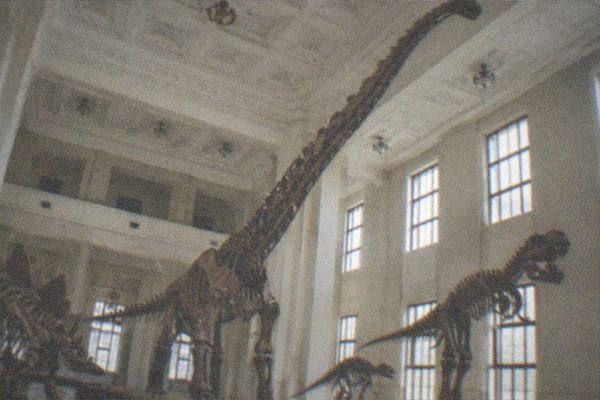
The Paleozoological Museum of China, a short walk from the Planetarium in Xicheng, is the fossil alternative: door CNY 20, reservation up to 6 days ahead, closed Monday. It is a smaller, quieter, more traditional museum, and for an adult who prefers specimens to interactive stations it is arguably the more pleasant two hours. The National Natural History Museum of China, free with a 3-day-ahead reservation, covers similar ground at no cost, though its free tickets are among the most competed-for reservations in the city.
| Museum | Door price | Reservation window | Closed | Best for an adult who likes |
|---|---|---|---|---|
| China Science and Technology Museum | CNY 30 | 7 days ahead at 18:00 | Monday (except statutory holidays) | Technology, invention, space hardware |
| Beijing Planetarium | Paid shows, exhibition hall priced separately | 5 days ahead | Tuesday (except holidays) | Astronomy and dome presentations |
| Paleozoological Museum of China | CNY 20 | 6 days ahead | Monday | Fossils and quiet galleries |
| National Natural History Museum of China | Free | 3 days ahead at 11:00 | Monday (except statutory holidays) | Dinosaurs, at the cost of a hard reservation |
One combination that works well for a science-minded adult with two days: CSTM for the afternoon of day one, the Planetarium and Paleozoological Museum, which sit near each other in Xicheng, on the morning of day two. The two days use different reservation windows, so set both reminders. For a wider look at what else the city offers families and solo adults, our guide to Beijing museums that work for both kids and adults covers the overlap in more depth.
How Should An Adult Plan The Visit Itself?
Book the main hall for a weekday afternoon if you can, allow two to three hours, add the giant-screen theatre only if the film listing appeals, and skip the Children's Science Paradise entirely. The museum is in Chaoyang near the Olympic Green, and Mondays are closed except statutory holidays, so anchor the rest of your Beijing week around that.
Timing is the single biggest lever on enjoyment. School groups concentrate in weekday mornings, so a 13:00 or 14:00 entry puts you into the halls after the loudest wave has passed. Weekend afternoons are busier overall but lack the organized groups, which many adult visitors prefer. Either way, the ancient-invention floor first is the right order: it is the least crowded of the four in the afternoon, and it sets up the space floor at the top of the building as the finale.
Getting there is straightforward. The museum sits in the Olympic Green area of Chaoyang District, and the surrounding neighborhood rewards a walk after your visit: the Water Cube and Bird's Nest are close by, and the area is one of the more pleasant modern districts to wander at dusk. Foreign visitors should carry the passport used for the reservation, because entry is real-name and the document has to match the booking. Do not plan a same-day itinerary around buying a ticket on arrival; the presale quota makes that a coin flip on popular dates, and a failed coin flip costs the whole afternoon.
Two adjacent museums deserve a slot in the same week if this one lands well. The Zhoukoudian Peking Man site, and whether it is worth the trip, is the paleoanthropology complement to CSTM's technology story, a day trip out to Fangshan with its own 7-day-ahead reservation window. And for the free-museum side of the city, our overview of free museums in Beijing explains why free almost never means walk-in, which is the single most useful thing to understand about museum logistics in this city. Visitors planning a longer stay can fold all of this into a three-day Beijing museum itinerary without backtracking.
The verdict for an adult, stated plainly: this is a real museum with two floors of genuinely adult material, one floor of mixed value, and one floor you walk through fast. It costs CNY 30 at the door and a reservation secured seven days out. If ancient Chinese engineering and modern space hardware interest you, it is one of the better-value tickets in Beijing. If they do not, the city's history and art museums will serve you better, and knowing that before you spend an afternoon is exactly what this page is for. More on the wider landscape, including what else the city's museums charge and how their booking windows differ, is on Beijing Museums.
Common Questions About The China Science And Technology Museum For Adults
Is The China Science And Technology Museum Worth It For Adults?
Yes, provided you go for the main exhibition hall rather than the children's areas. The ancient-invention floor and the space hardware floor reward adult visitors with two to three hours of genuinely engaging material, for a CNY 30 door ticket. The hands-on middle floors are more kid-weighted, especially when school groups are present.
Do adults have to book in advance?
Yes. The museum requires a real-name reservation, with booking opening 7 days ahead at 18:00 Beijing time and presale quantities limited. There is no reliable walk-up option for general visitors. A foreign passport is the document you register under, and you carry that same passport for entry.
Is the China Science and Technology Museum closed on Mondays?
Yes, it closes on Mondays except statutory holidays. This matches the near-universal Monday closure rule across Beijing's national and municipal museums, so never anchor a Monday itinerary around it.
How much time does an adult need?
Two to three hours for the main hall is the realistic range. Add roughly 45 minutes if you book a giant-screen theatre session, and skip the Children's Science Paradise entirely, as it is designed for ages 3 to 8 with accompanying adults and sold by separate session.
Can you buy a ticket at the door on the day?
No, not reliably. The presale quota is limited and stops when sold out, and popular weekend and holiday dates do run out. Book through the official channel when the window opens, or use a passport-based reservation service if the Chinese-language booking flow is a barrier.
Which floor is best for adults?
The ground-floor Glory of China gallery, with its working reconstructions of Song and Ming dynasty machinery including Su Song's astronomical clock tower, is the strongest adult material in the building. Challenges and the Future, the space and energy floor, is the second priority.