Does The Beijing Museum Of Natural History Have Real Dinosaurs?
Yes, the Beijing Museum of Natural History has real dinosaur fossils, plus casts, skeletons and a free-entry reservation system explained plainly, with alternatives if you cannot get a slot.
Does The Beijing Museum Of Natural History Have Real Dinosaurs?
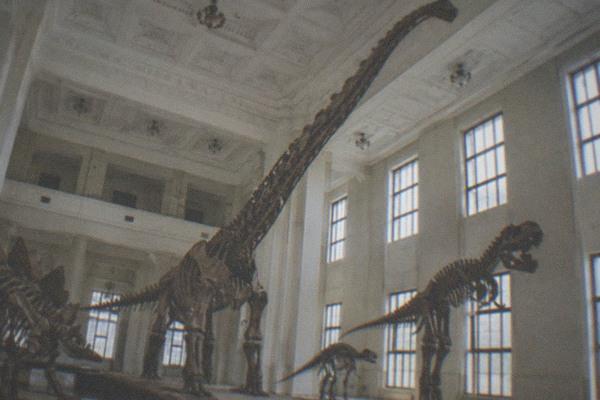
Yes, real dinosaur fossils are on display, though not every skeleton in the hall is original bone. The museum, officially the National Natural History Museum of China, mixes genuine fossil material with research casts, which is standard practice at every major natural history museum in the world. Entry is free, but a real-name reservation is mandatory, the window opens 3 days ahead at 11:00, and the museum closes Monday except statutory holidays.
The short answer satisfies most visitors, but the details decide whether your visit actually happens. The museum sits in Dongcheng, near the Temple of Heaven quarter, and it is the institution most Beijingers mean when they say "the natural history museum." Its paleontology halls are the reason families cross the city for it, and the dinosaur gallery is the single most crowded room in the building on a weekend. School groups arrive by the busload through term time, and the gallery's layout, one large hall with a central spine of mounts, funnels everyone through the same few sightlines.
The distinction between a fossil and a cast matters more here than anywhere else in Beijing. A real fossil is mineralized bone, the actual animal, dug from the ground and stabilized for display. A cast is a precise replica, usually resin molded from the original specimen, mounted because the real bones are too heavy, too fragile, or too scientifically important to hang in a public hall. Museums label the difference, but the labels are small and often in Chinese with brief English captions, so visitors walk out genuinely unsure what they saw. The museum's own English pages describe permanent exhibitions that include paleontology and fossil material among the free displays, with charges only for some temporary exhibitions.
There is a second reason the question deserves a careful answer rather than a yes. Beijing has more than one institution displaying fossil animals, they sit in different districts, they charge differently, and they run entirely different booking systems. A visitor who books the wrong one, or books the right one for the wrong day, discovers the difference only after standing at a closed gate. The rest of this article separates the venues, explains the reservation mechanics that actually control access, and lays out a day plan that works around the museum's Monday closure.
If your trip is short and the dinosaur question is really a "which science museum should I spend a half-day on" question, three Beijing venues compete for that slot, and each sells a reservation product that removes the booking-window risk. The trio below covers the interactive option, the astronomy option, and the paleontology day trip, so you can match the product to the kind of science your group actually wants.
What Do &Quot;real Dinosaurs" Actually Mean In A Museum Hall?
Every major natural history museum, including this one, displays a mixture of original fossil bone and high-quality casts, and the mixture is deliberate science practice rather than a tourist trick. Original fossils of complete skeletons are rare, heavy, and irreplaceable, so institutions mount casts for the dramatic poses and keep originals in study collections or selected exhibited pieces. The dinosaur hall here follows that convention, so visitors see real fossil material and replicas in the same room.
Think about what survives burial for tens of millions of years. A complete dinosaur skeleton is a scientific event, not a routine find. Paleontologists more often recover partial individuals, and a museum reconstructs the missing elements from other specimens of the same species, casting the gaps so the public sees a whole animal. When you stand under a mounted sauropod anywhere in the world, from London to New York to Beijing, you are looking at a mosaic: real bone where it exists, cast where it does not.
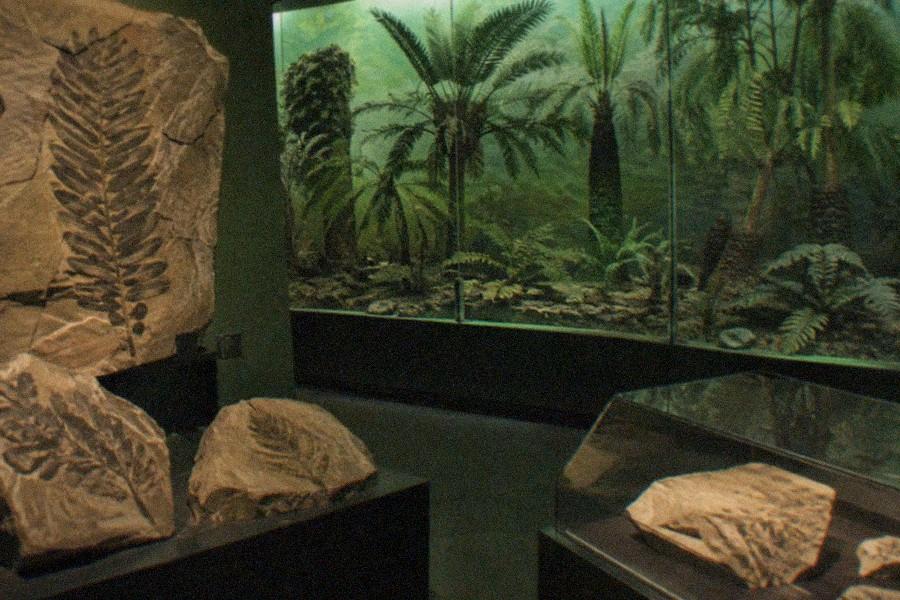
The Beijing museum's fossil collections are substantial and the institution does genuine research, which is the strongest signal that original material is present. Its permanent paleontology displays cover the age of dinosaurs and the mammals that followed, and the fossil invertebrate and plant material in the adjacent halls is largely authentic, because shells, ammonites, and leaves fossilize far more completely than large vertebrate bone. Many visitors find the smaller original fossils, examined at close range in cases, more convincing than the towering mounts. A trilobite you can put your eye an inch from is, in a strange way, more real than a sauropod you have to lean back to see.
This is also why the cast question should not disappoint anyone. A cast is made from the original specimen, so it carries the exact anatomy, down to surface texture and pathology marks on the bone. Scientists use casts for exactly the same reason the public does: they let a single important fossil exist in many places at once without the original ever leaving the vault. When a museum mounts a cast of a holotype specimen, the individual that defined the species, the public is seeing the most scientifically valuable object in the collection, reproduced at full fidelity.
A practical tip from museum practice worldwide: read the mount's base plate. Original elements are usually flagged, and mounts built entirely from casts say so. Photograph the plate if the gallery is busy and read it later, because the difference between "type specimen, original" and "cast of specimen held elsewhere" is the whole answer to the question a surprising number of visitors leave with. The plates are the museum telling you plainly what you are looking at, and they reward the thirty seconds it takes to find them.
For families whose real goal is a hands-on science half-day rather than paleontology specifically, the China Science and Technology Museum in Chaoyang is the stronger pick. Its main hall spreads four themed exhibition floors across science and technology content for all ages, and its children's science paradise is aimed at ages 3 to 8 with a parent, running morning and afternoon sessions that are ticketed separately. The reservation product starts from $21, the door price is CNY 30, and it carries a 4.1 rating from 10 reviews. The booking window opens 7 days ahead at 18:00, and the museum closes Monday except statutory holidays.
One point of honesty about that product, in the same spirit as the fossil-and-cast distinction above: the science museum's own reservation channel is the official one, and the third-party listing is a booking service that makes the real-name reservation on your behalf using the passport details you supply. It is useful precisely when the official mini-program is awkward from a foreign phone, and it is refundable if the official quota is exhausted before your booking is placed. It is not a discounted ticket and not a skip-the-line privilege, it is the same timed entry, arranged for you.
How Do You Get Into The Museum If Entry Is Free?
Admission to the permanent exhibitions is free, but free never means walk-in here: individuals must make a real-name reservation on the museum's official website or WeChat account, the window opens 3 days ahead and updates at 11:00 each day, one booking per day per ID, and there is no on-site reservation channel for general visitors. Groups book 4 days ahead. The museum closes Monday except statutory holidays, and some temporary exhibitions charge separately.
This is the part of the answer that ruins more Beijing trips than any closed hall. The reservation system is the barrier, not the price. Slots release at 11:00 three days before your intended visit, and popular weekend dates can be taken within minutes of release, because the whole city of school groups and families is competing for the same quota. Set an alarm for 10:55 Beijing time, have the site or the WeChat account open, and book the moment the window refreshes.
The official visiting guidance is explicit that permanent exhibitions are free, with a charge for some temporary exhibitions, and that individual reservations open 3 days ahead with the daily 11:00 update, per the museum's own visit pages. Foreign visitors should note what the research could and could not confirm: the museum accepts real-name booking through its official channels, and where a passport is confirmed to work in a channel this site says so, but for this venue the passport question is not resolved in the verified research, so plan for the official website route and check the booking form's ID field when the window opens rather than assuming.
| Question | Answer |
|---|---|
| Entry price | Free for permanent exhibitions |
| Temporary exhibitions | Some charge separately |
| Reservation | Required, real-name, no walk-up |
| Individual window | Opens 3 days ahead, updates at 11:00 |
| Group window | 4 days ahead |
| Closed day | Monday, except statutory holidays |
| Booking channels | Official website and official WeChat account |
If the 11:00 release passes you by, do not stand at the door hoping. There is no same-day fallback for general visitors. Instead, pivot the day: the museum's Dongcheng location puts you within a short ride of several venues that do not need a reservation at all, and the walk-up list in Beijing is short but real, including the Capital Museum, free with walk-up entry and closed Tuesday instead of Monday. The free-museums guide on Beijing Museums sorts the whole roster by which ones you can genuinely walk into.
The pattern behind those numbers explains why this article keeps returning to clock times. Beijing's museums do not run first-come queues, they run quota releases, and each venue picks its own release hour. A visitor who knows the hour can plan around it; a visitor who does not spends the morning of their visit refreshing a page that will not open until the next day's window. Write the release times into your itinerary next to the museum names and the whole system stops feeling arbitrary.
Is The Paleozoological Museum The Same Thing?
No, the Paleozoological Museum of China in Xicheng is a separate institution with its own collection, its own building, and its own rules: entry costs CNY 20, reservations open 6 days ahead, and it closes Monday. It is run by the Institute of Vertebrate Paleontology and Paleoanthropology, the research body behind many of China's most famous fossil finds, so its halls hold a different, deeper selection of original fossil vertebrates.
Visitors confuse the two constantly, and the confusion is expensive because their booking windows differ. The natural history museum is the broad family museum with dinosaurs, animals, plants, and humans. The Paleozoological Museum is the specialist collection, physically smaller, quieter, and stuffed with fossil fish, ancient amphibians, early mammals, and the Peking Man material that made the institute famous. If your question is "real dinosaurs," the natural history museum is the mainstream answer, and the paleozoology museum is the connoisseur's answer.
The two institutions even answer the "real" question differently. Because the Paleozoological Museum is attached to a working research institute, a larger share of its displayed material is original holotype and referred specimens, the actual bones that papers are written about, and the mounts tend to be more sober and more densely labeled. The natural history museum, by contrast, is built for the wide audience: bigger mounts, more dramatic poses, more casts doing the theatrical work. Neither approach is wrong, they are different jobs, but a visitor deciding between them should know which job each museum is doing.
The full comparison, including which one better suits children and how their reservation systems differ, is laid out in the two museums compared for visitors, and it is worth reading before you commit a morning. Getting both in one day is feasible, they sit in adjacent districts, but each needs its own booking and each closes Monday, so a Monday attempt nets you neither.
One more paleontology stop belongs on the same shortlist, and it is outside central Beijing: the Zhoukoudian Peking Man Site Museum in Fangshan, the actual cave site where Peking Man fossils were excavated. It is a day trip, entry is CNY 30 at the door, reservations open 7 days ahead at 17:00, and it closes Monday except national holidays. The reservation product starts from $13. What makes Zhoukoudian different from both museums is that the site itself is the exhibit: you walk the hillside where the excavations happened, and the museum building interprets what came out of the ground beneath your feet.
How Should A Dinosaur-Focused Visitor Plan The Day?
Plan around three fixed constraints: the museum closes Monday, the reservation window opens at 11:00 exactly 3 days out, and the dinosaur hall is busiest from late morning onward, so a first-thing entry slot gives the calmest viewing. Pair the visit with the Temple of Heaven, whose park is open daily and whose paid halls close Monday, or with a second science venue booked for the afternoon, and treat the Paleozoological Museum as a separate day's stop.
Morning logic is simple. School groups arrive mid-morning, and the dinosaur gallery is a single large hall with limited circulation, so the difference between a 9:00 entry and an 11:00 entry is the difference between photographing mounts cleanly and queuing to see them at all. Book the earliest slot the reservation system offers, do the dinosaur hall first while the building is quiet, and save the botany and human-biology floors for later when the crowds have thickened downstairs.
For the afternoon, the science-nature theme has two strong companions. The Beijing Planetarium in Xicheng, sister institution to the Ancient Observatory, runs paid dome and sphere theater shows alongside its exhibition halls, with reservations opening 5 days ahead and a Tuesday closure except holidays; the show-by-show breakdown is in the planetarium show and ticket guide. The China Science and Technology Museum, covered earlier, is the interactive option, and the case for adults enjoying it on their own merits is made in the science museum for grown-ups review.
The Temple of Heaven pairing deserves a note on tickets, because it is the most common afternoon add-on and its rules trip people up. The park itself is open daily and a separate transaction from the paid halls, which close Monday except statutory holidays, and the through-ticket question is unpacked in what a Temple of Heaven through ticket includes. Walking the parkland after a morning of fossil halls is the recovery half of the day, and the geometry works: the natural history museum sits in the same part of Dongcheng, so you are not crossing the city twice.
The Monday rule deserves one final emphasis because it is the most expensive mistake in Beijing museum planning. Chinese national and municipal museums close Monday as a near-universal pattern, and this museum follows it except when a statutory holiday falls on a Monday, in which case it stays open. If your itinerary puts you in Beijing across a Monday, put the Forbidden City's moat walk, the 798 Art Zone's streets, or a park on that day, and keep this museum for Tuesday onward. The venues that genuinely stay open are few enough to count on one hand, and the museums open on Monday guide lists them without padding.
If the dinosaur question is really a family-trip planning question, the museums-with-kids angle, including which venues have hands-on areas and which are stroller-friendly, is covered in the Beijing museums with kids guide, and the science venues above all rank well on that list. A three-day plan that threads the natural history museum, the science museum and a day trip without ever landing a museum on a Monday is sketched in the 3-day Beijing museum itinerary.
Before the practical questions, here again are the three reservation products that cover Beijing's other dinosaur-adjacent, science-nature venues, each of which removes the booking-window scramble from your trip. If the free museum's 11:00 release defeats you on a short visit, any of these three still gets your group a guaranteed science half-day.
Common Questions About Dinosaurs At The Beijing Museum Of Natural History
Does The Beijing Museum Of Natural History Have Real Dinosaurs?
Yes. The museum displays real dinosaur fossil material alongside research casts, the standard mix at every major natural history museum. Entry to the permanent exhibitions is free, but a real-name reservation is required, opening 3 days ahead with an 11:00 daily update, and the museum closes Monday except statutory holidays.
Is the Beijing Museum of Natural History free?
Yes, permanent exhibitions are free, though some temporary exhibitions charge separately. Free does not mean walk-in: a real-name reservation through the official website or WeChat account is mandatory, opening 3 days ahead for individuals and 4 days ahead for groups.
How do I book tickets for the natural history museum?
Book through the museum's official website or its official WeChat account when the window opens 3 days before your visit, at the 11:00 daily update. One reservation per day per ID. There is no on-site reservation channel for general visitors, so a missed release means rebooking for a later date.
What is the difference between the natural history museum and the Paleozoological Museum?
They are separate institutions. The natural history museum in Dongcheng is the free, family-oriented general museum. The Paleozoological Museum of China in Xicheng is a specialist fossil vertebrate collection, entry CNY 20, reservations opening 6 days ahead, closed Monday.
Is the museum open on Monday?
No, it closes Monday except when a statutory holiday falls on a Monday. This Monday closure is the norm across Beijing's national and municipal museums, so plan the rest of a Monday around parks and walk-up venues instead.
Which other Beijing museums have fossils or paleontology?
The Paleozoological Museum of China in Xicheng is the closest alternative, and the Zhoukoudian Peking Man Site Museum in Fangshan is the day-trip option at the actual excavation site, entry CNY 30 with reservations opening 7 days ahead at 17:00.