Is There A Beijing Museum Pass Worth Buying?
The Beijing Museum Pass is a real, decades-old paper booklet, and the 2026 edition covers roughly 140 venues for CNY 120, admitting two people across the whole year. The catch is that the biggest names in the city are mostly not in it, and the venues that are included often still need a reservation.
Short answer
Yes, there is a Beijing Museum Pass: the 2026 edition covers about 140 venues, costs CNY 120, and admits two people for the whole year. It is worth buying if you plan to visit several smaller paid museums. It does not cover the Palace Museum, the National Museum of China, or most free headline venues.
Is There A Beijing Museum Pass Worth Buying?
The 2026 Beijing Museum Pass launched on 11 November 2025, covers about 140 venues, and costs CNY 120 for a booklet that admits two people for the entire year. That is the short version. The longer version is where the value question lives, because the pass is a very specific instrument: it is strongest at the small and mid-sized paid museums that most visitors have never heard of, and weakest exactly where most visitors spend their money. There is no Beijing CityPASS, no card, no app-only product dressed up under a similar name. What exists is a printed pocket booklet, sold through official channels and Xinhua bookstores, and it works the way a coupon book works: you present it at the counter of a participating venue and the admission is free or discounted.
This guide walks through what the pass actually buys, what it pointedly does not, and how to decide whether CNY 120 comes back to you across a trip. The honest answer depends almost entirely on how many of the covered, door-fee venues you will realistically visit, and on whether you understand Beijing's reservation system, which no pass waives.
What Exactly Is The Beijing Museum Pass?
The Beijing Museum Pass is a printed booklet, not a card or an app, reissued every year. The 2026 edition lists about 140 participating venues and costs CNY 120 per copy. One booklet covers two people for the full calendar year, and it is deliberately non-personalized: any two visitors can use the same copy, including foreign passport holders, since it carries no name or ID binding.
It is sold through the pass's own official channels and through Xinhua bookstores. The booklet is organized as a directory: each venue gets an entry with its address, opening details and the specific deal it offers, which is either free admission or a discount, stated per venue. The official launch announcement describes the 2026 edition as covering 140 venues with free or discounted admission for two people at the vast majority of them.
The pass is a product of the Beijing museum ecosystem itself, which is why it behaves more like a community coupon book than a commercial tourist pass. It is not a skip-the-line instrument, it is not a transport pass, and it does not bundle the headline imperial sites that dominate most itineraries. Think of it as a discount directory for the city's long tail of museums, and the arithmetic starts to make sense.
| Pass basic | Detail |
|---|---|
| 2026 edition price | CNY 120 per copy |
| Venues covered | About 140 |
| People per copy | Two |
| Validity | The full year of the edition |
| Where to buy | Official pass channels and Xinhua bookstores |
| ID requirement | None, the booklet is non-personalized |
Which Museums Does The 2026 Pass Cover, And What Does It Cost To Use?
The pass covers about 140 venues, most of them small and mid-sized paid museums rather than the headline names. At the vast majority of covered venues it gives free or discounted admission for two people, so a couple visiting three or four covered venues with door prices around CNY 20 to CNY 30 each can recover the CNY 120 cost inside a week of relaxed sightseeing.
The covered list skews toward exactly the museums that are cheap at the door but easy to stack: the specialist and single-theme venues. Door prices from the city's own listings give a sense of the tier the pass works at. The Geological Museum of China charges CNY 15 at the door, the Paleozoological Museum of China CNY 20, the Beijing Ancient Architecture Museum CNY 15, the Great Bell Temple Ancient Bell Museum CNY 30, the Beijing Folklore Museum at Dongyue Temple CNY 10, the China Railway Museum's Dongjiao Exhibition Hall CNY 20, the Beijing Auto Museum CNY 30, and the Poly Art Museum CNY 20. Two people paying those prices out of pocket across six venues spend more than the pass costs.
The pass does not remove the single biggest friction in Beijing, which is the reservation system. Most of these venues still require an advance real-name reservation even for a visitor holding a pass, and 22 of the 31 venues this site tracks require one. The booklet gets you the discount at the counter; it does not book your slot. Anyone planning to lean on the pass should read the how to book Beijing museum tickets guide first, because the booking window, not the price, is usually the barrier.
How Does The Pass Compare With Just Paying Door Prices?
For a solo traveler visiting two or three covered museums, the pass usually loses against the door fees you would otherwise pay. For two people visiting four or more covered venues, it wins comfortably, because each booklet admission is effectively free after the break-even point. The pass is priced for couples and families staying long enough to browse beyond the headline sites, not for a two-day stopover hitting the famous names.
The arithmetic is simple enough to run before you buy. Take the venues you actually plan to visit, add their door prices for two people, and compare against CNY 120. The infographic below shows how quickly a modest circuit of covered venues clears the pass price, using the door fees recorded in the city's listings.
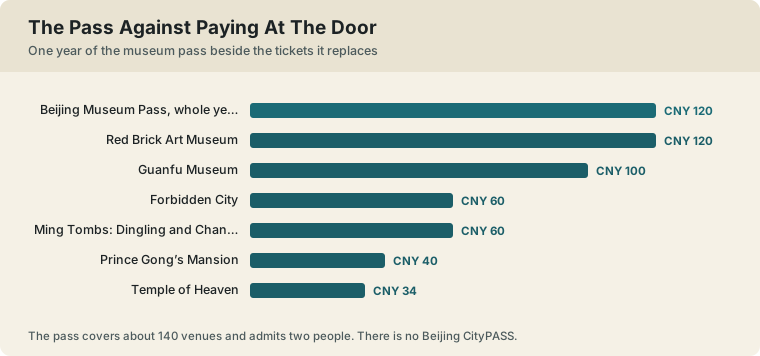
One caution belongs here: the pass's per-venue deals are stated per venue in the booklet, and a small number of entries are discounts rather than free admission. The launch announcement says free or discounted admission at the vast majority of locations, which means a minority are discounts. Check the booklet's own entry for each venue rather than assuming free entry everywhere.
One way to stretch a museum-heavy week is to put a free guided walk on the days between museum visits. The pay-what-you-want walk that meets closest to the pass's most-visited neighbour is the Forbidden City tour led by guide Echo, a four-hour walk meeting at Donghuamen Gate, and the full Beijing hub on GuruWalk lists the other verified English walks, all booked as free slots with a tip at the end.
Which Famous Beijing Sites Does The Pass NOT Cover?
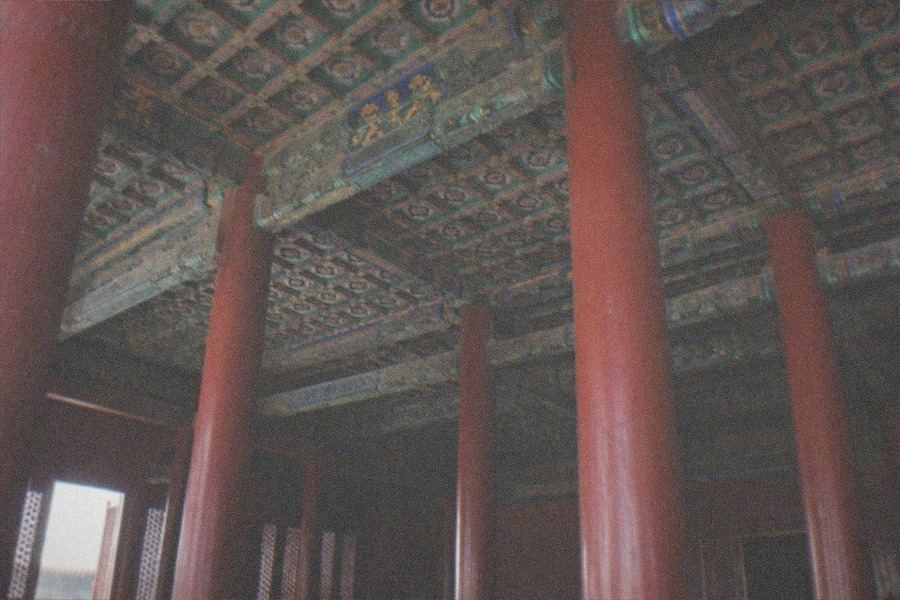
The pass does not cover the Palace Museum, the National Museum of China, the Summer Palace, the Lama Temple, the Temple of Heaven, the Ming Tombs, or the Old Summer Palace. Those venues either sell their own tickets through official channels or are free with a mandatory reservation, and none of them accepts the booklet in place of a ticket. If your itinerary is built around those names, the pass will do almost nothing for you.
This is the single most important fact about the pass, and the one most likely to disappoint a buyer who assumed it worked like a European city card. The headline imperial sites are run as separate ticketing systems. The Palace Museum sells its CNY 60 peak-season ticket only through its official WeChat mini-program and website, with the museum's own visit page stating it has authorized no third-party ticket agents and sells no same-day tickets at all. The Summer Palace charges CNY 30 at the door. The Lama Temple charges CNY 25. The Temple of Heaven charges CNY 34. None of that money is offset by the booklet.
The free giants are a different kind of exclusion. The National Museum of China, the Capital Museum, the National Art Museum of China, the National Natural History Museum, the China National Film Museum, the Beijing Grand Canal Museum and the Museum of the War of Chinese People's Resistance Against Japanese Aggression are all free to enter already, so the pass adds nothing there either. Their barrier is the reservation, not the price. The free museums in Beijing guide covers how those booking windows work.
| Headline venue | Door price | In the pass? | How entry actually works |
|---|---|---|---|
| The Palace Museum (Forbidden City) | CNY 60 | No | Official channel only, 7 days ahead at 20:00 |
| Summer Palace | CNY 30 | No | Reservation required, window not published |
| Lama Temple | CNY 25 | No | Reservation required, 7 days ahead |
| Temple of Heaven | CNY 34 | No | Reservation required, 7 days ahead |
| National Museum of China | Free | No | Reservation 7 days ahead at 17:00 |
| Capital Museum | Free | No | Walk-up with valid ID |
For the Forbidden City, a reservation service can book the official ticket under your passport details, refundable if the quota sells out first, and the museum's no-authorized-agents warning and the existence of these services are both facts worth holding at once. The product starts from $7 and carries a 4.5 rating across 655 reviews.
Is The Pass Worth It For Foreign Visitors Specifically?
Yes, because the booklet is non-personalized and carries no ID binding, so a foreign visitor can buy and use it exactly like a local, with no Chinese phone number or bank card involved. That makes it one of the few Beijing museum products with zero booking friction. The trade-off is that foreign visitors tend to visit the famous sites the pass excludes, so its value depends on deliberately browsing the covered long tail.
Most of Beijing's museum friction for foreigners lives in the booking systems: WeChat mini-programs, real-name registration, and windows that open at odd hours. The pass sidesteps none of that where reservations apply, but it also adds none of it. You buy a paper booklet with cash if you like. For travelers on the 240-hour visa-free transit, or anyone without a Chinese mobile number, a discount instrument that works at a counter is genuinely useful, provided the venues on your list are covered ones. Everything else covered here is indexed on Beijing Museums.
The realistic foreign-visitor scenario is a week in Beijing with a mixed itinerary. Days one and two go to the Forbidden City and the free giants, none of which the pass touches. Days three onward, the pass starts earning: the Ancient Architecture Museum inside the Temple of Agriculture complex, the Great Bell Temple, the Railway Museum's locomotive hall, the Auto Museum, the Geological Museum's mineral hall. The 3-day Beijing museum itinerary and the Beijing day trip museums guides sketch how those circuits fit together.
The Summer Palace, which the pass also excludes, is the one headline site where a third-party product is often worth comparing against the door: the reservation product starts from $14 and holds a 4.7 rating across 1,144 reviews.
How Do You Buy The Pass, And How Do You Use It At The Counter?
You buy the pass through its official channels or at Xinhua bookstores, pay CNY 120, and receive a printed booklet listing every covered venue and its specific deal. At each venue you present the booklet at the ticket counter, the staff marks the entry, and admission is free or discounted for up to two people. Nothing is registered online, and no ID is attached to the copy.
Using it is deliberately low-tech. The booklet is a pocket directory, and each venue's entry tells you what you get there. Because it is non-personalized, a family can share one copy two people at a time, and a traveler can hand a half-used booklet to a friend at the end of a trip. The pass is sold as a year product, so an autumn buyer gets the tail of one edition and should check when the next launches rather than paying full price for a nearly expired copy.
Two practical rules make the booklet behave. First, reservations still apply where the venue requires them, so check each venue's booking window before you set out. Second, the booklet's own entry is the authority on the deal, and venues occasionally adjust terms mid-year, so read the entry rather than relying on a summary from a blog. The Beijing museums map helps cluster the covered venues so a day's route does not scatter across four districts.
| Step | What you do | Watch out for |
|---|---|---|
| Buy | Official channels or Xinhua bookstore, CNY 120 | Check the edition year before paying |
| Plan | Read each venue's entry in the booklet | Some entries are discounts, not free entry |
| Reserve | Book slots where the venue requires them | The pass never waives a reservation |
| Visit | Present the booklet at the counter for two people | Bring the passport used for any reservation |
What About Free Museums, Walk-Ups, And The Pass's Blind Spots?
The pass is irrelevant at Beijing's free museums, because free admission plus a reservation is already the best available deal, and the booklet cannot improve on zero. It is equally irrelevant at the six venues that take genuine walk-ups with no reservation, where the only question is the door fee. Its blind spot is the popular paid tier, which excludes the biggest names and covers the smaller ones.
The free tier is where the pass's marketing and its usefulness diverge most. The Capital Museum, for example, is free with walk-up entry using valid ID, and its official visit page describes ID-based entry with no mandatory advance reservation. A pass adds nothing there. The same is true at the National Art Museum of China, free with a reservation that opens 7 days ahead at 16:00, and the National Natural History Museum, free with a reservation opening 3 days ahead at 11:00. The Beijing museums open on Monday guide matters more than any discount on that tier, because Monday closures are what actually break itineraries.
The walk-up tier is small: only 6 of the 31 venues this site tracks take genuine walk-ups with no reservation. Among them are the Guanfu Museum at CNY 100, the Beijing Ancient Architecture Museum at CNY 15, and the Great Bell Temple Ancient Bell Museum at CNY 30. Those last two are exactly the kind of cheap, walk-up, pass-covered venue where the booklet performs best, and stacking several of them in one day is how the CNY 120 pays back fast.
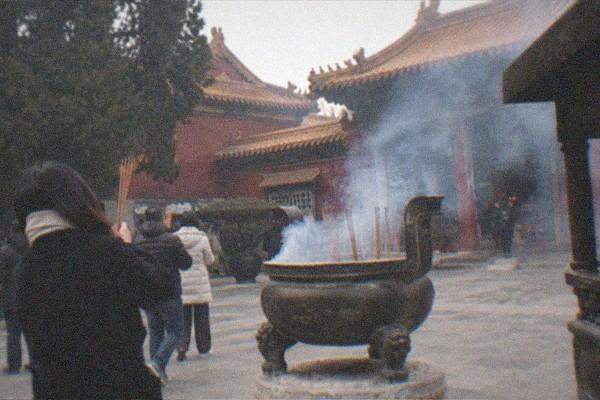
The Lama Temple, by contrast, is a headline site outside the pass: CNY 25 at the door, reservation required 7 days ahead, and a reservation product from $10 carrying a 4.5 rating across 158 reviews. It is also not strictly a museum, it is a working Tibetan Buddhist temple, and the pass's coverage logic never extends to it.
How Do You Plan A Week Around The Pass Without Wasting It?
Plan the headline sites first, on their own bookings, then fill the gaps with clusters of covered venues in the same district so each pass day clears two or three entries. Buy the booklet early in the trip, not on the last day, and pair each covered venue with its reservation window so a sold-out slot does not strand a section of the itinerary. A well-planned week can clear the pass cost by day four.
District clustering is the trick. The Geological Museum and the Paleozoological Museum sit in Xicheng near the Capital Museum, so one day there can combine a free walk-up giant with two covered door-fee venues. The Beijing Auto Museum in Fengtai pairs with the Anti-Japanese War Museum, free with walk-up entry, in the same district. The Railway Museum and the 798 area venues sit in Chaoyang, a natural pairing with the 798 art district guide's circuit. Two covered venues plus one free giant per day is a comfortable rhythm, and it clears break-even inside three days for two people.
The weather and the calendar shape the plan too. Beijing Museums, this site, exists largely because the booking window, not the price, is the barrier, and that applies to pass holders as much as anyone. The indoor Beijing on cold and rainy days guide is the pass's natural companion, since the covered venues are mostly compact indoor halls that suit a bad-weather day. Families should cross-check the Beijing museums with kids guide, because the Science and Technology Museum's children's hall, which the pass does not cover, sells its sessions separately and books 7 days ahead at 18:00.
| Day shape | Venues | Pass role |
|---|---|---|
| Headline day | Forbidden City, National Museum of China | None, book separately |
| Xicheng cluster | Capital Museum (free), Geological Museum, Paleozoological Museum | Two covered entries |
| Chaoyang cluster | Railway Museum, 798 area | One to two covered entries |
| Fengtai cluster | Auto Museum, Anti-Japanese War Museum (free) | One covered entry |
| Bad-weather day | Any covered indoor halls | Two to three covered entries |
When Should You Skip The Pass Entirely?
Skip the pass if your trip is two days or less, if your list is only the famous imperial sites, or if you are traveling solo and will visit fewer than four covered venues, because the arithmetic cannot clear CNY 120 in those cases. Also skip it if you cannot check the current edition's coverage before buying, since the venue list changes each year and a stale assumption is the fastest way to waste the money.
The solo case is the clearest. One person paying CNY 120 needs to visit roughly six covered venues at typical CNY 15 to CNY 30 door prices to break even, and a short trip rarely supports that. The headline-only case is just as clear, because the pass covers none of the sites that headline-only travelers visit. And the assumption case is the quiet one: the pass's value is entirely in its venue list, and the list is the one thing a buyer must verify in the current edition rather than trust from an old article.
For everyone else, the pass is one of the better-value products in a city whose headline tickets are cheap but whose booking systems are demanding. CNY 120 for two people across a year, at venues that charge CNY 10 to CNY 100 at the door, is generous arithmetic as long as the covered list matches your taste. Buy it for the long tail, book the giants separately, and keep the reservation windows straight, and the booklet earns its place in your pocket.
Common Questions About The Beijing Museum Pass
Is there a Beijing Museum Pass?
Yes. The Beijing Museum Pass is a printed booklet reissued annually. The 2026 edition covers about 140 venues, costs CNY 120, and admits two people for the whole year. There is no Beijing CityPASS; the museum pass is the only pass product of this kind.
Is the Beijing Museum Pass worth buying?
It is worth buying for two or more people staying several days who plan to visit four or more of the covered small and mid-sized museums. It is not worth buying for a short trip built around the Forbidden City and the other headline sites, which it does not cover.
Does the Beijing Museum Pass cover the Forbidden City?
No. The Palace Museum is not in the pass. Its tickets are sold only through the museum's official WeChat mini-program and website, booking opens 7 days ahead at 20:00, and no same-day tickets are sold at all.
Does the Beijing Museum Pass work for foreign visitors?
Yes. The booklet is non-personalized and carries no ID binding, so a foreign visitor can buy and use it like anyone else. Reservations, where a covered venue requires them, still apply and still use your passport.
Where can you buy the Beijing Museum Pass?
Through the pass's own official channels and at Xinhua bookstores. The 2026 edition costs CNY 120. Check the edition year before buying so you do not pay full price for a nearly expired copy.
Does the pass replace museum reservations?
No. The pass covers the admission price at the counter, nothing more. Where a venue requires an advance real-name reservation, you still need to book your slot, and the pass does not unlock walk-in entry.