Is The Lama Temple A Museum Or A Working Temple?
The Lama Temple (Yonghegong) is an active Tibetan Buddhist monastery with a paid entry ticket, not a conventional museum. Here is what that means for planning, booking and visiting.
Is The Lama Temple A Museum Or A Working Temple?
The Lama Temple is a working Tibetan Buddhist temple and active monastery, not a museum in the institutional sense, meaning there is no gallery of labeled exhibits run for conservation and study. It charges CNY 25 at the door, requires an advance real-name reservation opening 7 days ahead, and appears on museum itineraries because its logistics behave exactly like a major museum's. The distinction shapes how you book, dress and behave inside.
The honest answer to the question is "both, but the temple wins." Yonghegong is listed across Beijing's official tourism channels among the city's museum-adjacent cultural sites, and the Beijing municipal government's English museum pages fold sites like it into the same planning conversation as the Palace Museum and the National Museum of China. That placement is practical rather than categorical: the city groups together everything that needs a timed real-name reservation, and Yonghegong certainly does.
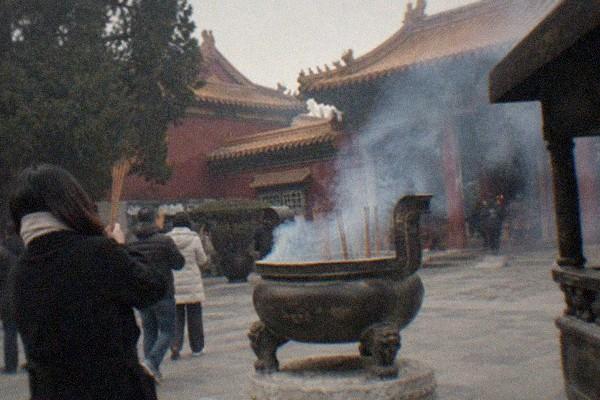
What makes the classification genuinely interesting is that the temple's monastic life continues around the visitors. Monks live and worship on the site. Incense burns in large courtyard brazers through the day. Services, observances and festival crowds shape the rhythm of the complex in ways no state museum experiences. A visitor arriving with museum expectations, quiet halls and roped-off artifacts, will find something louder, smokier and more lived-in than expected.
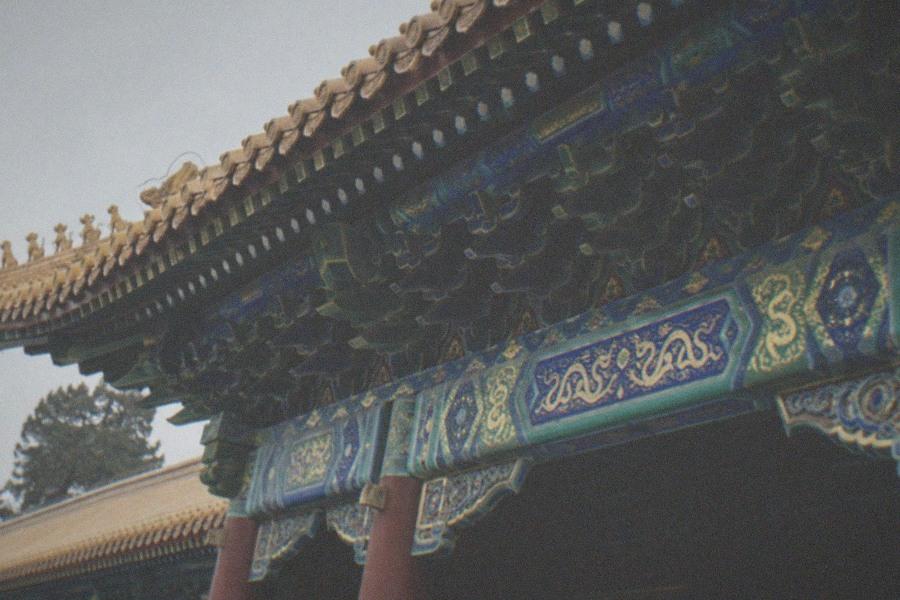
The building's history explains the hybrid. Yonghegong began as a princely residence of the Qing era before its conversion into a lamasery, so its architecture is imperial in origin while its function has been religious for centuries. That double inheritance is why it turns up on imperial-themed itineraries next to genuine palaces, and why travelers so often arrive unsure what kind of site they have actually come to see. The answer, in practice, is that they have come to a monastery that happens to be one of the most beautiful imperial building complexes in the city.
That said, the visitor infrastructure is pure modern Beijing. Entry is controlled by reservation, identification is checked, and the door price of CNY 25 sits alongside a third-party booking product from $10 that handles the reservation on a visitor's behalf. If you have read Beijing Museums before, you will know this pattern well: in this city the booking window, not the ticket price, is usually the real barrier to entry.
Why Does A Working Temple Sell Tickets Like A Museum?
Yonghegong charges CNY 25 at the door because it is simultaneously a protected heritage complex and a managed visitor site, and Beijing manages nearly all such sites through paid, reserved, real-name entry. The temple does not sell a museum experience; it sells access to an active religious precinct whose buildings and courtyards are themselves the exhibit. The reservation system exists to cap the crowds a working monastery would otherwise be overwhelmed by.
The ticket model is Beijing's standard one, and it is worth understanding how unusual that is internationally. Across the 31 venues this site tracks, 22 require an advance real-name reservation and only 6 take genuine walk-ups. Yonghegong sits firmly in the reserved majority. The booking window opens 7 days ahead of the visit date, which means a traveler who decides on Tuesday to visit on Saturday is already competing inside a window that opened the previous Saturday.
For foreign visitors, the mechanics are the same as at the big museums. Real-name reservation means the ticket is tied to an identity document, and the passport is the document a foreign visitor uses. Guides to booking Chinese attractions with a passport, such as the foreign-visitor booking walkthroughs published for recent travelers, consistently report that passport-based real-name systems work for major Beijing sites, and that the friction lies in Chinese-language mini-programs and payment setup rather than in any rule against foreigners.
The third-party product follows from that friction. A listing from $10 does not buy a different or better ticket; it is a reservation service that books the official CNY 25 entry under the passport details the customer supplies. The venue's own price stays CNY 25 at the door, and the service fee is what the listing charges for handling the Chinese-language booking process. The two numbers describe two different transactions and should never be confused with one another.
There is also a crowd-management logic that a museum visitor will recognize instantly. Yonghegong's halls are not large, and its courtyards fill quickly on weekends and festival days. A timed, capped reservation system is the only way a working monastery of this scale can absorb the volume of visitors Beijing's tourism economy sends it. The temple's religious life and its visitor economy coexist because the reservation system keeps the two in balance, and travelers who respect that balance, by booking properly and arriving at their slot, get the better experience for it.
If your trip is museum-heavy, the practical consequence is that Yonghegong slots into your planning exactly like the Palace Museum: pick the date early, book when the window opens, and carry the passport you booked with. The three-day Beijing museum itinerary treats it that way, pairing the temple with the imperial sites of the same district.
What Does The CNY 25 Entry Actually Cover?
The CNY 25 ticket covers entry to the entire temple complex and all of its halls, nothing more and nothing less. There are no separately priced galleries or add-on exhibition tickets like those at the Palace Museum; what you buy is access to the whole precinct, which you walk at your own pace alongside worshippers making the same circuit for devotional reasons.
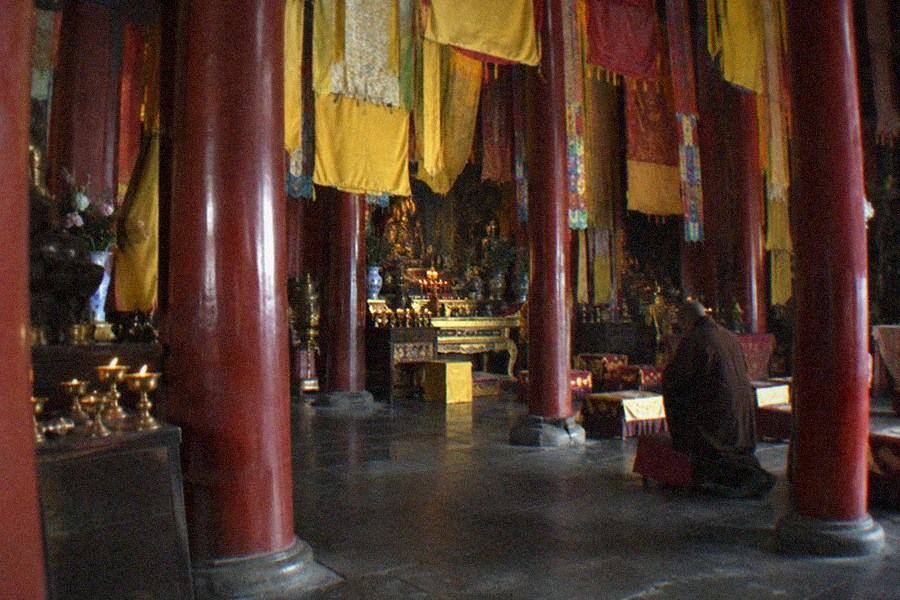
This is where the museum comparison breaks down most usefully. At a museum, the ticket buys curated interpretation: labels, rooms, a route designed by curators. At Yonghegong, the ticket buys admission to a religious building that interprets itself through architecture, ritual and activity. Visitors who want structured context should plan for it separately, whether that is an audio guide, a guidebook, or simply reading up beforehand. The site itself is under no obligation to explain itself the way a museum does.
The reservation product reflects the same reality. The listing from $10 carries a 4.5 rating across 158 reviews, which is a strong score for a simple entry product, and the reviews consistently reward the thing the service actually controls: getting the reservation secured correctly and the passport details matched, so entry at the gate is smooth. Nobody reviews a temple in a booking product; they review whether the booking worked.
Two practical notes follow from the "working temple" half of the answer. First, dress and behavior norms apply that no museum imposes: modest clothing, quiet voices in the halls, and no photographing worshippers or ritual activity where signage prohibits it. Second, the complex is busiest when the religious calendar is busiest, and those dates are not always the dates a museum-focused guide would predict. A monastery's peak is set by observances, not by school holidays.
A third note concerns incense, which surprises some first-time visitors. The courtyards hold large burners where worshippers light and offer incense throughout the day, and the smoke can be thick enough to bother anyone with sensitive lungs or eyes. It is also, for many visitors, the single most memorable sensory feature of the visit, the smell that recalls the place long after the trip. Come prepared for both: it is an atmosphere, not an inconvenience to be engineered away.
The contrast with the city's true museums is stark and worth planning around. The free museums in Beijing cost nothing at the door but several still demand the same real-name reservation; the history museums in Beijing charge nothing like a temple's devotional crowd dynamic. Yonghegong is the only site on a typical itinerary where the queue in front of you may be pilgrims rather than tourists.
When Is The Lama Temple Open, And What Is Its Closed Day?
The Lama Temple's weekly closed day is not published, an unusual gap in a city where most museums shut on Monday as a near-universal rule. Do not assume a Monday closure either way: plan around the official reservation channel's available dates, which is the only reliable source. The reservation window opens 7 days ahead, so the booking system itself will tell you which dates are visitable before any guide can.
This is a genuinely awkward fact, and it is better stated plainly than papered over. Across Beijing's museum landscape, Monday is the default closure day, and most venues publish exceptions for statutory holidays. Yonghegong's closure pattern is not published in the sources this site's research verified, which means any confident claim about its Monday status, open or closed, would be a guess. A traveler who plans a Monday around an assumed closure may waste a day; one who plans around an assumed opening may arrive at a gate that is shut.
The reservation system resolves the uncertainty in your favor. Because slots open 7 days ahead, the live availability calendar is effectively the temple's published schedule: if a date can be booked, the site plans to admit visitors on it. That makes the booking step not just a formality but the single best source of truth for planning, which is one reason the reservation service products exist at all. They put a traveler inside that 7-day window without needing to operate a Chinese-language mini-program at the moment slots release.
For itinerary purposes, treat Yonghegong as date-flexible but not day-guaranteed. If your trip includes a Monday, the safer planning pattern is to put the sites with confirmed Monday exceptions on that day and check the temple's live availability for the rest of the week. The Beijing museums open on Monday guide exists precisely because this question decides more itineraries than any ticket price does.
A related planning habit is worth adopting for the whole city, not just this temple. Beijing's closure patterns shift with statutory holidays, and a venue that closes on a normal Monday may open on a holiday Monday, while a venue that normally opens may run reduced hours. The only reliable approach is to check each venue's own channel for the specific dates of your trip, and to do it inside the booking window rather than weeks before, when the information may not yet reflect holiday adjustments.
How Does Yonghegong Compare With The Forbidden City And Summer Palace?
Yonghegong, the Forbidden City, and the Summer Palace all share imperial origins and reserved entry, yet they offer three very different visits. The Forbidden City costs CNY 60 with a 7-day booking window opening at 20:00, the Summer Palace CNY 30 with required reservation, and the Lama Temple CNY 25 with a 7-day window. In character, the Forbidden City is a museum proper, the Summer Palace a park with paid inner halls, and Yonghegong a working monastery.
| Site | What it is | Door price | Third-party product from | Rating | Booking window | Closed day |
|---|---|---|---|---|---|---|
| Lama Temple (Yonghegong) | Working Tibetan Buddhist temple | CNY 25 | $10 | 4.5 from 158 reviews | 7 days ahead | Not published |
| Forbidden City (Palace Museum) | Palace museum | CNY 60 | $7 | 4.5 from 655 reviews | 7 days ahead at 20:00 | Monday (except statutory holidays) |
| Summer Palace | Imperial garden park, paid inner halls | CNY 30 | $14 | 4.7 from 1144 reviews | Required, window not published | Inner halls close Monday (except public holidays) |
The comparison rewards a close look. The Forbidden City is the only true museum of the three, and it is also the strictest: no same-day tickets exist at all, every visitor must hold a real-name reservation, and the Palace Museum states publicly that it has authorized no third-party agents to sell its tickets. The third-party products around it are reservation services that book the official ticket under your passport details, refundable if the official quota sells out first. Both facts belong together, and the question of whether you can buy Forbidden City tickets at the gate has a blunt answer: no, not at all.
The Summer Palace is the loosest of the three in classification, a park whose general grounds and paid inner halls operate on different rules, and the Summer Palace through ticket guide explains what the combined option covers. Yonghegong sits between the two: smaller than either, more emotionally intense than both, and the only one of the three where the site's primary daily purpose is worship rather than tourism or recreation.
Scale matters too, and it favors the temple for tight schedules. The Forbidden City rewards half a day or more, and the Summer Palace is a half-day pleasure at minimum. Yonghegong can be absorbed meaningfully in a fraction of that, which is why it so often appears as the morning or afternoon anchor of a Dongcheng walking day, paired with the Confucius Temple and Imperial College a short walk away or the Lama Temple's own surrounding hutong streets. A visitor does not need to sacrifice a palace to fit in a monastery.
For a visitor choosing among them on a tight schedule, the honest framing is this: the Forbidden City is the unmissable museum, the Summer Palace is the half-day pleasure, and the Lama Temple is the hour that most often ends up as a visitor's favorite memory of the three. Its 4.5 rating from 158 reviews on the booking product is earned on exactly that ratio of effort to reward.
Is The Lama Temple Worth It On A Museum-Focused Trip?
Yes, for most museum-focused travelers, provided it is booked with the same discipline as a major museum. The CNY 25 door price is modest, the 7-day reservation window is manageable, and the experience is categorically different from every true museum on the itinerary, which is exactly the argument for including it. Treat it as the one working religious site in a week of galleries and palaces, and it earns its slot easily.
The case for inclusion rests on contrast. A week of Beijing museums delivers imperial thrones, bronze zodiac heads, dinosaur skeletons and film history, all behind glass and rope. Yonghegong delivers none of that and complements all of it: a heritage complex in continuous religious use, where the "collection" is the living tradition itself. Museum travelers who skip it often report that their itinerary felt complete but monotone.
The case for booking carefully rests on the numbers. The reservation window opens 7 days out, the door price is CNY 25, and the third-party reservation service starts at $10 with a 4.5 rating across 158 reviews. None of those figures describes a difficult booking in Beijing terms; the Palace Museum's window is just as tight and its door price more than double. The only genuine uncertainty is the unpublished closed day, and the live availability calendar resolves it at booking time.
One planning note for the museum-pass crowd: the 2026 Beijing Museum Pass covers about 140 venues at CNY 120 for two people across the year, but a working temple's entry is a different kind of transaction from a museum's admission, so check the pass directory for Yonghegong's current inclusion rather than assuming it. The Beijing Museum Pass guide covers what the pass does and does not promise.
A final note on expectations, because it decides whether the visit lands well. Come to Yonghegong for atmosphere, architecture and the sight of a living tradition, not for information delivery. Read a little beforehand about Tibetan Buddhism and the temple's Qing history, arrive with your reservation and passport in hand, give it a unhurried hour or two, and let the incense do the rest. That is a very different brief from any museum's, and it is precisely why the answer to this page's question matters: knowing what you are walking into is what makes walking in worthwhile.
Common Questions About The Lama Temple
Is The Lama Temple A Museum Or A Working Temple?
It is a working Tibetan Buddhist temple and active monastery that sells a reserved, paid admission in the style of a Beijing museum. It is not a museum institution: there are no curated galleries or labeled collections. The CNY 25 door ticket buys access to a living religious precinct, and the reservation system exists to manage crowds around an active monastic community.
Do I need a reservation for the Lama Temple?
Yes. Entry requires an advance real-name reservation, with the booking window opening 7 days ahead of the visit date. A foreign passport serves as the identity document for the real-name system. Third-party reservation services from $10 handle the booking under your passport details; the venue's own door price remains CNY 25.
How much does the Lama Temple cost?
The venue charges CNY 25 at the door. A third-party reservation service is available from $10, which is a separate transaction: a service fee for making the official booking on your behalf, not a different or better ticket. The two prices should never be compared as though they were the same product.
Is the Lama Temple closed on Monday?
The temple's weekly closed day is not published in the verified sources for this site, so no confident claim can be made either way. Because the reservation window opens 7 days ahead, the live availability calendar is the reliable guide: if a date can be booked, the temple plans to admit visitors on it.
How long should I spend at the Lama Temple?
Most visitors spend between one and two hours on the main circuit of halls and courtyards, longer during festival periods when the complex is at its busiest and most atmospheric. It is a compact site compared with the Forbidden City or the Summer Palace, which makes it easy to pair with other Dongcheng sights on the same day.
Can a foreign visitor book the Lama Temple ticket themselves?
Yes, the real-name reservation system accepts a foreign passport at the major Beijing sites where this has been verified, and the booking friction for foreigners is generally the Chinese-language interface and payment setup rather than any rule excluding foreign documents. A reservation service from $10 exists for travelers who prefer to skip that process entirely.