What Is Inside The Temple Of Agriculture In Beijing?
Inside the Temple of Agriculture in Beijing sits the Ancient Architecture Museum, the emperor's ploughing altar and a quiet CNY 15 walk-up visit in Xicheng.
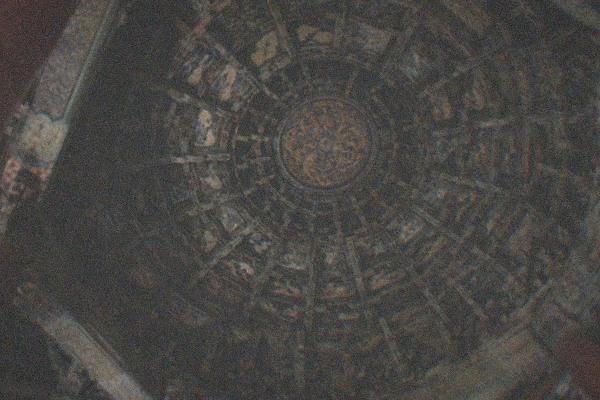
What Is Inside The Temple Of Agriculture In Beijing?
Inside the walls of the Temple of Agriculture, called Xiannongtan in Chinese, you find two things at once: the surviving altar complex where Ming and Qing emperors performed the sacred ploughing rite each spring, and the Beijing Ancient Architecture Museum, whose exhibitions on Chinese timber construction fill the restored halls. Entry costs CNY 15 at the door, no advance reservation is needed, and the site closes Monday except public holidays.
The complex sits just west of the Central Axis in Xicheng District, at 21 Dongjing Road, inside what was once the outer city's ritual landscape. It was laid out during the same early Ming construction campaign that produced the Forbidden City and the Temple of Heaven across town, part of a deliberate plan that gave the new capital a full set of ritual buildings arranged around its north-south spine. While the Temple of Heaven drew the emperor twice a year to pray for harvests, Xiannongtan is where he rolled up his sleeves, took hold of a plough, and cut a furrow himself to honor the farming that fed the empire.
That double identity is what makes the site unusual among Beijing's imperial survivors. You are not walking through a single museum laid out by one curator. You are walking through a ritual precinct where the architecture itself is the primary exhibit, and the halls have been given a second job: explaining how buildings like these were actually put together, joint by joint, bracket by bracket. Few visitors outside China's architecture community have it on their lists, which is precisely why the courtyards stay quiet even in peak season.
The complex is also one of only six venues among the 31 on this site's roster that take genuine walk-ups. That makes it a rare low-friction stop in a city where free museums often demand real-name reservations booked days ahead, a system covered in detail in the guide to how to book Beijing museum tickets. The contrast is worth internalizing before you plan anything in Beijing, because the reservation system is the single biggest structural difference between visiting museums in this city and visiting museums almost anywhere else. In most capitals, the famous sites are the hard ones to enter and the obscure ones are easy. In Beijing, obscurity does not guarantee ease, since even free venues can sit behind a real-name booking wall. Xiannongtan is the exception that proves how demanding the rule is.
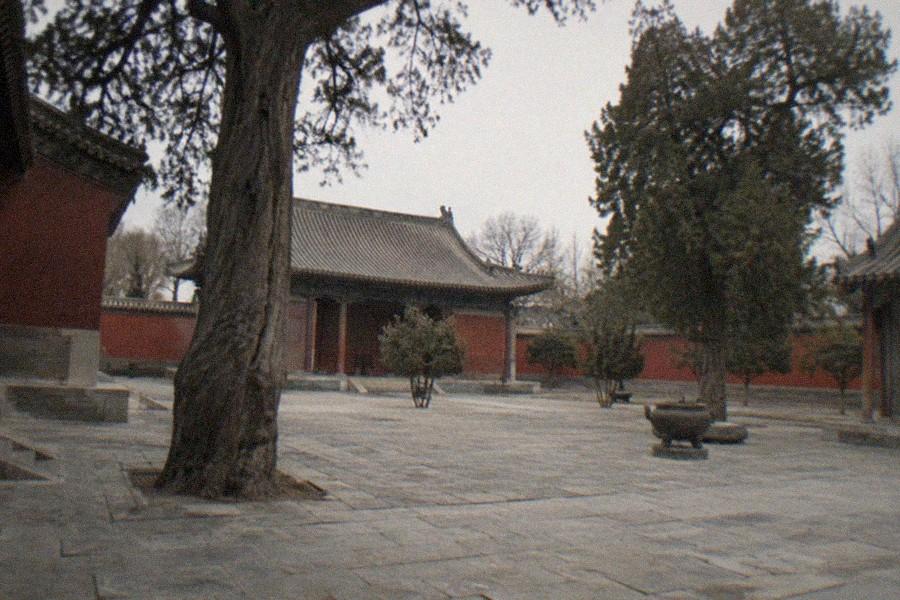
For most foreign visitors, Xiannongtan pairs naturally with the other imperial sites that anchor a Beijing itinerary. If you are still choosing which of those to lock in first, these three are the ones where booking ahead matters most.
What Is The Beijing Ancient Architecture Museum?
The Beijing Ancient Architecture Museum is a specialist museum installed inside the temple's restored Tai Sui Hall compound, tracing the whole arc of Chinese timber construction from rammed-earth beginnings through the Ming and Qing peak. Its exhibitions cover mortise-and-tenon joinery, the dougong bracket sets that hold up temple roofs, scale models of landmark buildings, and the Central Axis that links this very altar to the Forbidden City. It occupies the halls rather than replacing them.
The museum's great advantage is its setting. Reading about a bracket set in a glass case is one thing; walking out of the gallery into a hall whose ceiling is held up by the real thing is another. The exhibitions and the buildings explain each other, which is why architecture students and preservation professionals make the trip even though the museum barely registers in English-language guidebooks. A dougong set drawn on a wall panel looks like an abstract geometry puzzle. The same set, painted and load-bearing, three meters above your head, makes instant sense. That loop between explanation and evidence is what the museum does better than any classroom.
The collection's centerpiece is a set of large-scale timber models, including a full cutaway of a classic hall frame that lets you see how load travels from ridgepole to column without a single nail. Displays of joinery samples let you compare the actual cut shapes side by side, and the Central Axis model places Xiannongtan in its original context: one node in a ritual geography whose north end is Jingshan and the Bell and Drum Towers, and whose south end reaches toward the Temple of Heaven, Xiannongtan's ritual partner across the axis. Standing at the model, you can trace the whole ceremonial spine of the Ming and Qing capital in a single glance, and the altar you are standing in is one of its fixed points.
The museum's own site, bjxntgjg.cn, carries current exhibition notices. Because the venue has no third-party ticket product anywhere, the museum's own channel is the only place to check before a visit, and there is nothing to book in advance: you pay at the door. That also means no operator can sell you a shortcut here, and none needs to. The absence of a booking step is the shortcut.
Planning an imperial-hall day in Beijing does involve one real booking decision, since the most popular palace sites need reservations made days ahead.
How Much Does Entry Cost And Do You Need A Reservation?
Entry to the Temple of Agriculture and its museum costs CNY 15 at the door, and no advance reservation is required: this is a genuine walk-up venue, one of only six in the city's museum roster. The site closes on Monday except public holidays, the standard pattern for Beijing's municipal museums. There is no third-party ticket product for this venue at all, so the official channel is the whole story.
That combination, cheap, unreserved, and uncrowded, is nearly extinct in central Beijing. The Forbidden City opens its booking window seven days ahead at 20:00 Beijing time and sells no same-day tickets at all. The National Museum of China is free but requires a real-name reservation opening seven days ahead at 17:00. Against that backdrop, a CNY 15 walk-up is a small luxury. It also changes the psychology of the visit. When entry to a site demands a slot booked days in advance, you arrive with a schedule to protect and a fixed window to use. When entry is a walk-up, you can linger, leave for lunch, and come back, or decide on the spot that today is the day. Beijing does not offer that freedom often, and regular visitors learn to treasure the places that do.
One caveat: walk-up means walk-up, not guaranteed. Chinese national and municipal museums follow the Monday closure rule almost universally, and a visitor planning a Monday around a closed museum is the single most expensive scheduling mistake a Beijing trip can include. Check the museum's own channel for holiday exceptions, since statutory holidays override the weekly closure. The same logic applies to every venue in the table below, which is why the closed-day column deserves as much attention as the price column when you build a week.
| Venue | Door price | Reservation | Closed day |
|---|---|---|---|
| Temple of Agriculture / Ancient Architecture Museum | CNY 15 | Walk-up, none needed | Monday (except public holidays) |
| Capital Museum | Free | Walk-up with ID | Tuesday |
| Temple of Heaven paid halls | CNY 34 | Reserve 7 days ahead | Monday (except statutory holidays) |
| Forbidden City | CNY 60 | Reserve 7 days ahead at 20:00 | Monday (except statutory holidays) |
The Temple of Heaven comparison in that table is worth pausing on, because the two altars were designed as a pair. The Temple of Heaven's park is open daily, but its paid halls close Monday, so a visitor combining both ritual sites should treat Monday as a dead day for imperial interiors. For help sequencing the rest of the week, the 3-day Beijing museum itinerary does the ordering work for you. Note also that the Capital Museum's Tuesday closure is an outlier: it is the one major free museum in the table that shifts the dead day, which catches out visitors who assume Monday is the only risky morning.
Where Did The Emperor Actually Plough?
The emperor ploughed a small plot inside the altar complex known in Chinese as "one mu three fen," a phrase that survives today as a common idiom for someone's small personal domain. He cut a symbolic furrow there each spring, then climbed the ornate Viewing Terrace to watch ministers and farmers finish the field, a rite meant to honor the labor that fed the empire.
The ploughing ceremony, called qinggeng in Chinese, was among the most important state rituals of the imperial calendar. The emperor did not merely preside over it; he performed it, dressed for the part, guiding a plough drawn by decorated oxen while officials sowed seeds behind him. The Ming and Qing courts treated a failed or skipped ploughing rite as a serious omen for the year's harvest, and the ceremony was staged with the same precision as a sacrifice at the Temple of Heaven. Court records describe the choreography in detail: which officials walked where, how many furrows the emperor cut, who finished the field once he withdrew, and how the harvested grain from the plot was later stored as a symbolically charged reserve. Everything else covered here is indexed on Beijing Museums.
The Viewing Terrace, Guangentai, still stands: a square platform faced with carved stone and reached by carved stairways, from which the emperor watched the field being finished after his furrow. The plot itself survives as open ground inside the complex, which is why a visit here feels different from a palace visit. You are looking at a field, an altar, and a set of service halls, not a sequence of throne rooms. That agricultural core is the site's emotional center. Every other imperial venue in Beijing is about power expressed upward, in towers, thrones, and rooflines. Xiannongtan is the one place where the ritual script says the sovereign bent toward the soil, and the open ground makes that legible in a way no gallery label could.
The complex also held kitchens and storehouses for sacrificial offerings, and the gods honored here were the agricultural deities, including Xiannong himself, the divine farmer of Chinese legend. Beijing's municipal museum authority, whose pages sit under english.beijing.gov.cn, treats the site as a functioning museum venue with the standard municipal closure pattern. The surrounding neighborhood has changed beyond recognition since the altar's ritual heyday, but the walls preserved the precinct's scale, and the field's emptiness now reads as authenticity rather than neglect.
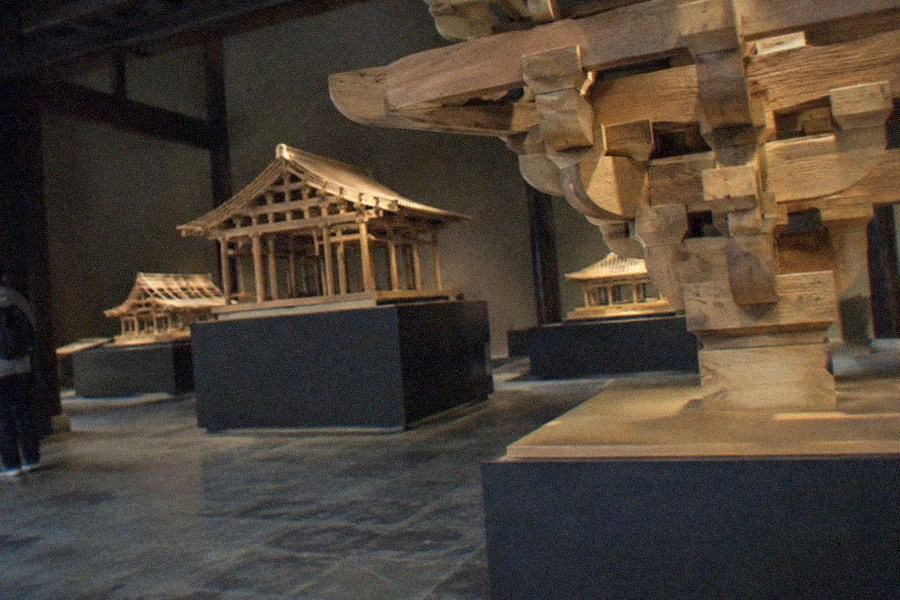
For travelers weighing whether the site earns a slot against Beijing's heavier hitters, the honest answer is that it suits a particular mood: unhurried, cheap, and genuinely educational about how Chinese buildings work. It also appears on the Beijing museums map as a Xicheng anchor, close enough to walk or ride-share to other Dongcheng and Xicheng stops. Visitors who love architecture, history, or simply silence tend to rank it high. Visitors chasing spectacle tend to forget it by dinner, and both reactions are fair.
How Long Does A Visit Take And When Should You Go?
Allow one to two hours for the Temple of Agriculture and its museum, longer if you read Chinese or are traveling with someone who does, since most exhibition text is bilingual only in part. The best pairing is a morning here followed by an afternoon at the Forbidden City or Temple of Heaven, but that only works on a day that is not a Monday, when the museum is closed.
The site is compact. The ritual field, the Viewing Terrace, the Tai Sui Hall compound, and the exhibition halls sit inside one walled precinct that you can cross in ten minutes at a stroll, so the variable is not distance but reading appetite. The timber models repay slow looking, and the halls themselves, with their exposed frames and restored ceilings, are the kind of exhibit you can stand under for a long while. Photographers should budget extra time for the courtyard light, which in late afternoon rakes across the hall fronts and gives the brick and timber a warmth the midday glare flattens.
Season matters less here than at Beijing's garden sites, since the interiors and the axis model are the point, but spring visits carry a thematic bonus: the ploughing rite was a spring ceremony, and the open field reads most vividly when the city around it is greening. Winter works too, and the museum is a solid entry on the indoor Beijing for cold and rainy days list, where its walk-up entry and covered halls do real work. Rain, in fact, is the site's friend: a wet weekday here can feel like a private visit, something that cannot be said of the Forbidden City's central axis on any day of the year.
Getting there is straightforward. The address is 21 Dongjing Road, Xicheng District, a short hop south of the Front Gate area and within reach of the Central Axis corridor. Because there is no booking step, you can decide the morning of, which is a flexibility almost nothing else in imperial Beijing offers. That spontaneity also makes it a good pressure valve: if a reservation elsewhere falls through, or a sell-out leaves you stranded, Xiannongtan is one of the few meaningful imperial sites you can still walk into the same afternoon.
If your Beijing plan leans on the big imperial sites rather than the quiet ones, the reservation-heavy venues deserve their booking slots locked in first.
How Does Xiannongtan Compare With The Temple Of Heaven?
Xiannongtan and the Temple of Heaven were designed as ritual twins on opposite sides of the Central Axis, one where the emperor prayed for harvests, one where he honored the work itself, but their modern fates diverged sharply. The Temple of Heaven is a CNY 34 global icon with a seven-day reservation window; Xiannongtan is a CNY 15 walk-up most foreign visitors have never heard of. The experience gap is the point.
That asymmetry is the site's best argument. The Temple of Heaven's park can feel like a stadium crowd on a clear day, while Xiannongtan's courtyards hold architecture students, local families, and quiet. The ritual logic of the pair rewards visiting both: at the Temple of Heaven you see where the empire asked heaven for a harvest, and here you see where the emperor answered with his own hands, at least symbolically. Read together, the two altars tell a complete story about how the imperial state understood its own food supply, as a covenant requiring both petition and labor.
The comparison also frames what Xiannongtan is not. It is not a palace, not a garden showpiece, and not a photo stop; visitors who arrive expecting Summer Palace polish leave disappointed. Visitors who arrive expecting a working museum inside a raw ritual precinct tend to rank it among Beijing's most underrated stops, a claim repeated often enough in Chinese-language travel writing that it has become the site's unofficial tagline. The honest framing is to treat it as a specialist museum with an extraordinary campus, rather than an attraction in the theme-park sense of the word.
There is a budget logic here too. A day built on walk-up venues, this museum, the Capital Museum, the free halls that need no booking, costs almost nothing and demands no planning. A day built on the reservation giants delivers spectacle but consumes planning energy days before you fly. Many experienced Beijing travelers split the difference: book the two or three heavyweights early, then fill the gaps with places like Xiannongtan that forgive improvisation. That hybrid approach survives missed alarms, jet lag, and weather, which pure reservation-stack itineraries do not.
One practical note for itinerary builders: because the altar sits near the axis, it slots neatly into a day built around the Beijing museums open on Monday problem, since most nearby alternatives close while a handful stay open. Planning around that closure pattern, rather than discovering it on arrival, is what separates a smooth museum week from a locked-door one. It is also the kind of detail that this site exists to surface, because the closure calendar is invisible in most English-language planning resources until you are standing in front of a shut gate.
Whichever combination you settle on, the trio below covers the three imperial Beijing sites where advance booking matters most, and each reservation product books the official ticket under your own passport details.
Common Questions About The Temple Of Agriculture
What Is Inside The Temple Of Agriculture In Beijing?
The site holds the surviving altar complex of Xiannongtan, including the emperor's ceremonial ploughing field and the carved Viewing Terrace, plus the Beijing Ancient Architecture Museum, whose exhibitions on Chinese timber construction fill the restored halls. Entry is CNY 15 at the door with no reservation needed.
Do you need to book the Temple of Agriculture in advance?
No. It is one of the few Beijing museum venues that takes genuine walk-up entry; you pay CNY 15 at the door. There is no third-party ticket product for this venue anywhere, so the museum's own channel is the only place to check details.
What day is the Temple of Agriculture closed?
Monday, except public holidays, following the standard municipal museum pattern. Statutory holidays override the weekly closure, so check the museum's own channel around holiday weeks.
How long should you spend at the Ancient Architecture Museum?
One to two hours covers the exhibition halls, the Viewing Terrace, and the ritual field. Allow longer if you want to study the timber models and joinery displays in depth.
Is the Temple of Agriculture the same as the Temple of Heaven?
No. They were designed as a ritual pair on opposite sides of the Central Axis, but they are separate sites. The Temple of Heaven hosted prayers for harvests; Xiannongtan hosted the emperor's ceremonial ploughing. They have different prices, different reservation rules, and different crowds.
Where did the phrase "one mu three fen" come from?
It comes from the small plot inside Xiannongtan that the emperor personally ploughed each spring. The phrase now survives in everyday Chinese as an idiom for a small personal territory or narrow domain.