Great Bell Temple Ancient Bell Museum Tickets
Tickets sold at the door only, nothing to book ahead.
Visitor info →Opens the museum's own website. Tickets are sold at the door only.
- Area
- Haidian
- Theme
- Niche & specialist
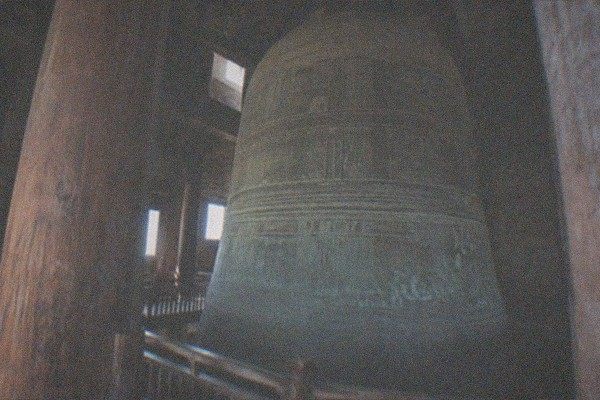
Behind a plain gate on the North Third Ring Road sits one of Beijing's quietest specialist museums, built around a temple whose entire purpose was to house a single bell. The Yongle Bell, cast in the early 15th century for the Ming emperor, weighs tens of tons and hangs in its own tower, its surface covered edge to edge with Buddhist sutra inscriptions. The museum around it gathers bells from across Chinese history, from Han dynasty hand bells to the massive bronze bells of imperial Beijing. It is a walk-up museum in a city of reservation systems, which makes it a rare easy morning for a visitor with a passport.
What Is The Great Bell Temple Ancient Bell Museum?
It is a specialist museum in Haidian District devoted entirely to bells, occupying the former Juesheng Temple, which was built in the 1730s to house the Yongle Bell. The museum displays bells spanning more than two thousand years of Chinese metallurgy, ritual and daily life. The temple courtyard layout survives, so the visit is part museum, part historic building.
The Yongle Bell is the reason the temple exists. Cast under the Yongle Emperor of the Ming dynasty, it is one of the largest bronze bells in the world, and its entire outer and inner surface is inscribed with Buddhist sutras, more than two hundred thousand characters in total. It hangs in the tower at the rear of the compound, and the museum's displays around it explain the casting technique, the acoustics and the ritual role such bells played in imperial Beijing.
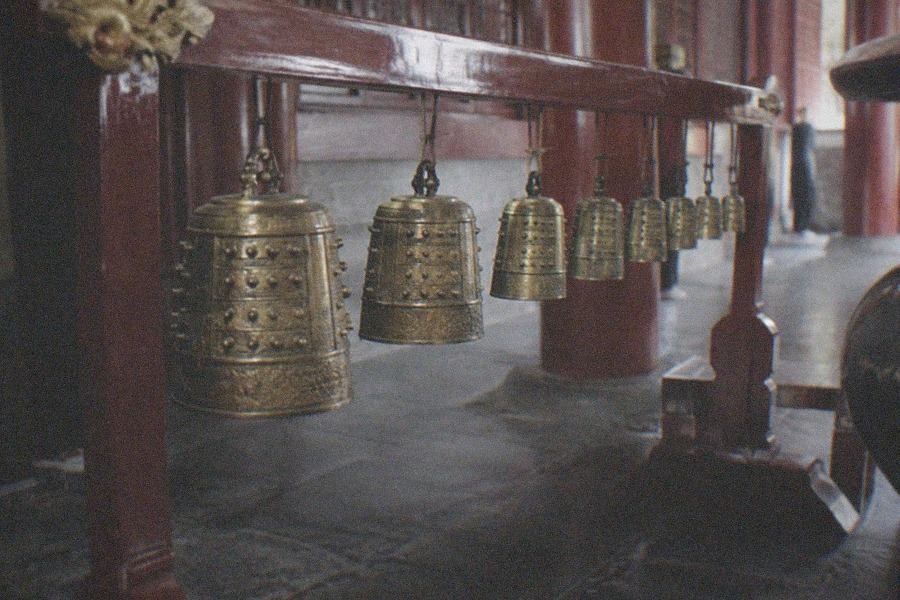
The rest of the collection is arranged thematically across the temple halls. Early Chinese bells, including small bronze bells from the Zhou and Han periods, show where the form began. A hall of foreign bells includes examples from Korea, Japan and Europe, which lets you compare the Chinese bell, with its rounded profile and tuned overtones, against the flat-sided Western church bell. Other displays cover Buddhist temple bells, hand bells used in ritual, and the foundry techniques that made large bell casting one of the most demanding crafts of the pre-modern world.
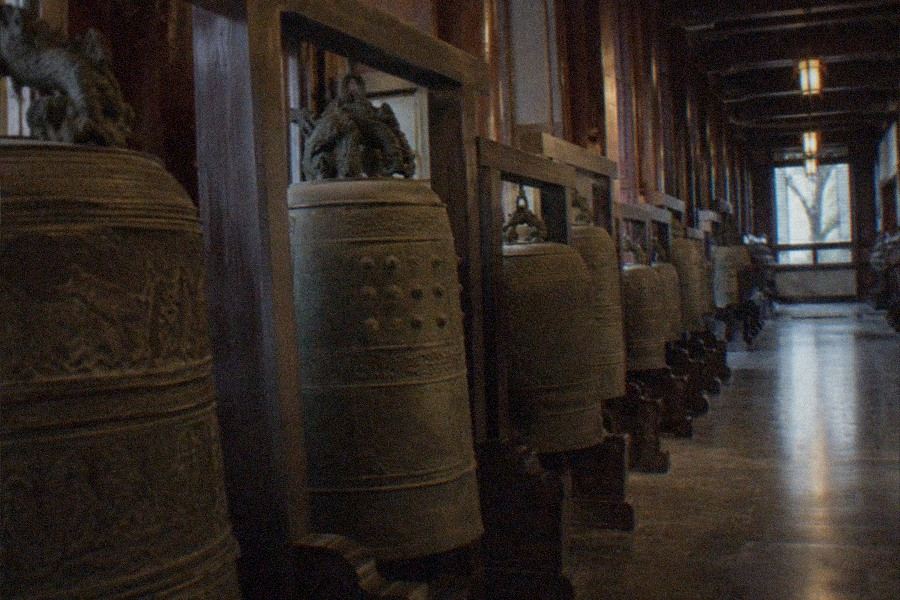
Because the museum sits inside a genuine Qing dynasty temple compound, the courtyards and gateways are part of the experience. The site is compact, and the setting on the North Third Ring Road means it sits in ordinary working Haidian, surrounded by universities and offices rather than a tourist district. That is part of its appeal: this is a museum Beijingers visit on a quiet weekend, not one on the international visitor circuit.
The museum is a protected heritage site administered under the Beijing municipal cultural heritage system, and the Beijing Municipal Cultural Heritage Bureau maintains the official information page for it at wwj.beijing.gov.cn. It has no website of its own, so that government page is the authoritative source for current notices.
How Much Do Tickets Cost?
Adult admission is CNY 30, paid at the door. The Great Bell Temple Ancient Bell Museum is not free, and it does not sell tickets through any third-party platform. There is no booking product for it on any international ticket site, so the door price of CNY 30 is the only price that exists. You pay in Chinese yuan on arrival.
That makes it one of the simpler museums in Beijing to budget for. There is no peak or off-peak split, no combination ticket to decode and no add-on galleries to price separately. The CNY 30 covers the whole compound, including the Yongle Bell tower and all exhibition halls.
Concession policies exist for the standard Chinese categories, including seniors with valid ID, and the museum honours the annual Beijing Museum Pass, which in its 2026 edition covers roughly 140 venues at CNY 120 and admits two people across the year. If you are doing a long museum trip through Beijing and plan to visit several paid venues, the pass can pay for itself; if this museum is a one-off stop, the single door ticket is the straightforward choice.
| Ticket | Price |
|---|---|
| Adult admission | CNY 30 |
| Booking channel | On-site ticket office only |
| Advance online purchase | Not available |
Bring cash or a Chinese QR payment method. Card acceptance at small museum ticket windows in Beijing is unreliable, and foreign bank cards often fail at the terminal. WeChat Pay and Alipay both accept foreign cards as of the 2024 to 2025 payment changes, which is the practical fallback most visitors now use.
For comparison, if you are mapping costs across Haidian, the Summer Palace charges CNY 30 for park admission and the Old Summer Palace (Yuanmingyuan) charges CNY 10, so a full day of Haidian sightseeing remains inexpensive by any capital-city standard.
Do You Need A Reservation?
No. The Great Bell Temple Ancient Bell Museum takes genuine walk-ups: you arrive, pay CNY 30 at the ticket window and enter. No advance real-name reservation is required, and no booking window or release time has been published because none exists for general admission. This is one of the few Beijing museums where nothing stands between you and the door.
That deserves emphasis, because it is unusual in this city. Twenty-two of the thirty-one museums this site covers require an advance real-name reservation, and at free museums the daily quota can run out entirely. The Great Bell Temple is one of the small group that takes walk-ups, alongside places like the Capital Museum and the Guanfu Museum. For a foreign visitor without a Chinese mobile number or a linked WeChat account, a walk-up museum removes the single biggest friction point in Beijing museum-going.
There is no reservation window to time, no slot release to catch at a specific hour, and no quota that sells out days ahead. You simply go. The only planning mistake that will cost you the visit is the closed day: the museum closes on Mondays. A Monday arrival, including a Monday that is part of a long weekend in Beijing, is the one way this trip fails, so check the calendar before you set out.
Because there is no timed entry, you can also decide on the day. If rain cancels a Summer Palace plan, this is a legitimate same-morning substitute, and it is fully under cover. The Beijing Municipal Cultural Heritage Bureau's page for the museum at wwj.beijing.gov.cn carries any temporary closure or notice, and since the museum has no site of its own, that page is where changes appear first.
How Do You Get To The Museum?
The museum's address is 31A North Third Ring Road West, Haidian District, Beijing. It sits directly on the North Third Ring, one of the city's main east-west arteries, which makes it reachable by taxi, ride-hail, bus or the Beijing Subway. The nearest subway station is not confirmed in published English sources, so plan by the ring road itself rather than a named stop.
By road, the Third Ring Road is the anchor. Any taxi driver given the Chinese name, Dazhongsi, will know the area, because the temple gave its name to the surrounding neighbourhood and the nearby interchange. From central Beijing the drive is roughly thirty to forty minutes depending on traffic; from the Summer Palace area in northwest Haidian it is a shorter hop along the same ring road. Ride-hailing apps like Didi work normally here and the museum has a street-front entrance on the ring road side.
For subway planning, the Beijing Subway network's own route planner at bjsubway.com is the reliable tool for working out the closest line to your starting point, since lines along the North Third Ring have changed with recent extensions. Buses also run the length of the ring road and stop within a short walk of the museum.
Parking on the North Third Ring is the weak point of a car trip. The ring road itself has no casual kerbside parking, and the immediate blocks are offices and residential compounds with their own garages. The practical answer is a drop-off or a parking spot in a nearby compound or shopping area, then a short walk. This is a museum better reached by subway, bus or taxi than by self-drive.
Cycling works well too. Beijing's shared-bike system covers this stretch of Haidian densely, and a ride along the ring-road side paths is a common way locals arrive on weekends.
How Long Should You Allow And How Should You Sequence A Visit?
Allow about one to two hours. The compound is compact, the halls are close together, and the collection rewards slow looking rather than long walking. A bell museum is mostly standing, reading and listening, so two unhurried hours is the realistic ceiling for most visitors, and a focused hour covers the highlights.
Sequence the visit from the front gate inward. Enter through the temple gate, walk the courtyard axis toward the rear, and save the Yongle Bell tower for the end. The tower is the emotional peak of the visit, and the earlier halls, which explain bell history, casting and the temple's own story, build the context that makes the big bell land. Going backwards robs the finale.
Read the casting displays carefully even if the technology does not obviously interest you. Large bronze bell casting in imperial China was a state undertaking, involving coordinated pour teams, massive moulds and alloy recipes tuned for tone, and the museum explains it with diagrams and foundry artefacts. It is the difference between seeing a large object and understanding why it was one of the hardest things a pre-industrial workshop could make.
Timing within the day matters less here than at quota-controlled museums, since walk-up entry means no slots. A weekday morning is the quietest experience; weekends bring local families but the museum never feels crowded the way central Beijing sites do. Avoid Monday entirely, and note that statutory holidays can shift normal patterns in both directions.
| Fact | Detail |
|---|---|
| Closed day | Monday |
| Area | Haidian District |
| Reservation required | No, walk-up entry |
| Booking window | None, no advance booking system |
| Time to allow | 1 to 2 hours |
Pairing the museum with other Haidian sites is the natural move. The Summer Palace and the Old Summer Palace (Yuanmingyuan) are both in the same district and both reachable within a short ride, so a morning at the bells followed by an afternoon at one of the imperial parks is a well-balanced Haidian day.
Who Is This Museum Right For?
It suits visitors with a genuine interest in Chinese craft, metallurgy, religious objects or offbeat museums, and it suits anyone who wants a walk-up Beijing museum with no booking friction. It does not suit visitors who need blockbuster galleries, English-language depth at every label or a half-day fill. It is a specialist stop, and it behaves like one.
The strengths are real. The Yongle Bell is a genuinely singular object, the temple compound gives the collection a historic setting most museums lack, and the comparative displays of Chinese, Korean, Japanese and European bells give you a framework you can carry to every other temple you visit in China. The walk-up entry means zero planning risk beyond the Monday closure.
The limitations are equally real. The museum's official information is published in Chinese on the Beijing government's cultural heritage pages, with no English-language version of its own, and label translation inside is partial. If you do not read any Chinese, you will get the shape of the story but miss detail. There is no cafe or restaurant infrastructure to speak of, so eat before you arrive or plan lunch elsewhere in Haidian afterwards.
Families with school-age children tend to do well here, because bells are physical, loud in the imagination and easy to explain, and the foundry displays have visible, concrete objects. Visitors with only two or three days in Beijing and a first-time itinerary should treat this as a second-tier stop behind the Military Museum of the Chinese People's Revolution and the imperial parks; visitors with a week, or a repeat visitor to Beijing, will find it one of the city's more distinctive small museums.
The final practical note bears repeating because it is the only hard rule: closed Monday, CNY 30 at the door, no reservation, and the Beijing Municipal Cultural Heritage Bureau page at wwj.beijing.gov.cn for current notices. Everything else about planning this visit is easy.
Questions People Ask
How much does the Great Bell Temple Ancient Bell Museum cost?
Adult admission is CNY 30, paid at the door. There is no online ticket, no third-party booking product and no peak or off-peak price, so CNY 30 at the on-site ticket window is the only transaction that exists for this museum.
Do I need to book in advance?
No. The museum takes genuine walk-ups, and no advance real-name reservation is required. There is no booking window or slot release time because there is no booking system for general admission. You arrive, pay and enter.
When is the museum closed?
It closes on Mondays. That is the single planning mistake that will cost you the visit, since there is no reservation to fail but also no alternative entry on a Monday. Every other day of the week operates on normal walk-up entry.
Where is the museum located?
The address is 31A North Third Ring Road West, Haidian District, Beijing. It sits directly on the North Third Ring Road, in the neighbourhood that took its name, Dazhongsi, from the temple itself.
Can a foreign visitor get in without a Chinese phone number or WeChat?
Yes. Because no reservation is required, the WeChat-based real-name systems that block some foreign visitors at other Beijing museums do not apply here. You simply pay CNY 30 at the ticket window on arrival.
How long does a visit take?
Allow one to two hours. The temple compound is compact and the halls are close together, so a focused visit covers the highlights in about an hour and an unhurried visit with all the casting and comparative displays fills two.
Is the museum suitable for children?
Reasonably so. Bells are physical, tangible objects and the foundry displays are concrete and easy to explain. There is no dedicated children's area, and label translation is partial, so plan to read and explain alongside younger visitors.
What else can I pair with it in Haidian?
The Summer Palace and the Old Summer Palace (Yuanmingyuan) are both in the same district and a short ride away. A morning at the bells followed by an afternoon at one of the imperial parks makes a well-balanced Haidian day, and the Military Museum of the Chinese People's Revolution is also in Haidian.